Home › Recipes › Breakfast ›Yemeni ›Yemeni Khubz al-Tawa with Honey and Ghee
BREAKFAST

Yemeni Khubz al-Tawa with Honey and Ghee

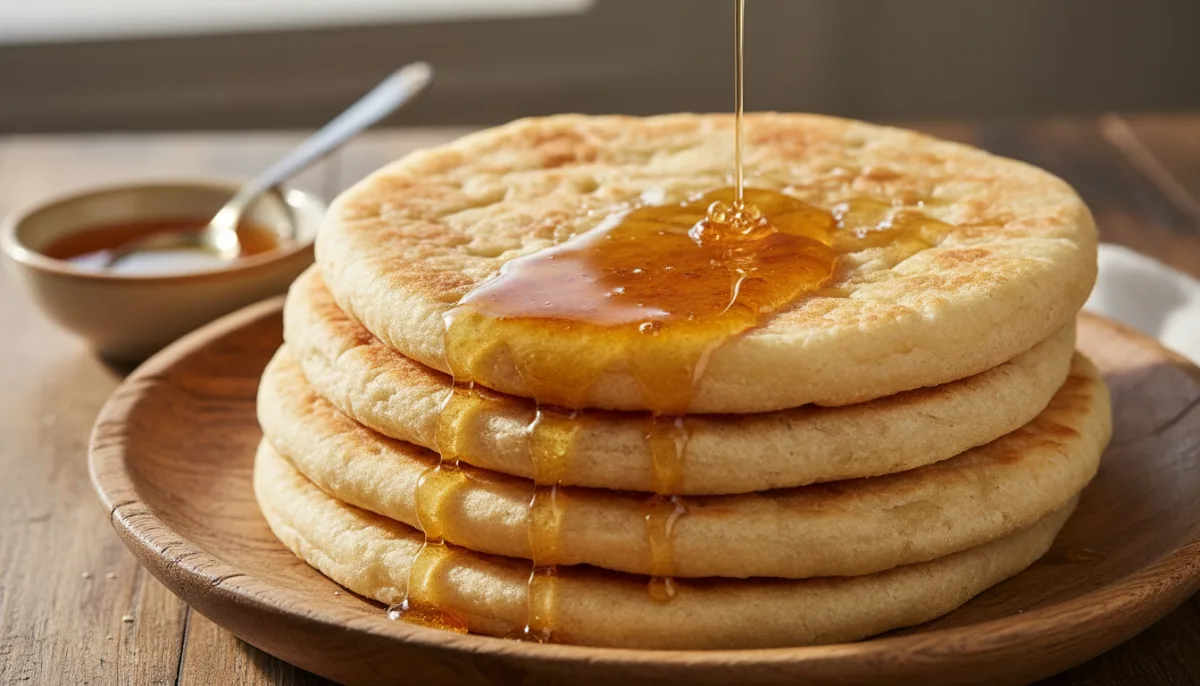
Khubz al-Tawa is a traditional Yemeni pan-fried flatbread, known for its soft, chewy texture. This recipe elevates it with a sweet drizzle of honey and rich ghee, making it a perfect comforting breakfast.

✎
HOW TO MAKE IT

Let's cook.

01

In a large bowl, combine 2 cups all-purpose flour, 1 teaspoon active dry yeast, and 1/2 teaspoon salt. Gradually add 1 cup warm water and 2 tablespoons vegetable oil, mixing until a soft, slightly sticky dough forms. Knead for 5 minutes on a lightly floured surface until smooth and elastic.

02

Divide the dough into 4 equal pieces. Roll each piece into a ball, then flatten each ball into a disc about 6 inches in diameter. Lightly brush each disc with a little vegetable oil, cover, and let rest for 10 minutes.

03

Heat a large non-stick skillet or tawa over medium heat. Lightly grease the skillet with a small amount of vegetable oil.

04

Place one dough disc in the hot skillet. Cook for 2-3 minutes per side, or until golden brown and puffed, turning once. Repeat with the remaining dough discs.

05

Once all khubz al-tawa are cooked, stack them on a plate. Drizzle generously with 1/4 cup melted ghee and 1/4 cup honey before serving warm.

About This Recipe

Khubz al-Tawa is a traditional Yemeni pan-fried flatbread, known for its soft, chewy texture. This recipe elevates it with a sweet drizzle of honey and rich ghee, making it a perfect comforting breakfast.
Yemeni Khubz al-Tawa with Honey and Ghee
Simple ingredients.
Big flavor.
✦
♨

Chef's Tips

For extra flavor, you can add a pinch of nigella seeds or sesame seeds to the dough. Adjust the amount of water slightly if your dough is too dry or too wet; it should be soft and pliable. Ensure your skillet is hot enough to get a good puff, but not so hot that the bread burns before cooking through.
↔

Easy Substitutions

Butter can be used in place of ghee for a similar rich flavor. Maple syrup or date syrup can substitute honey. Whole wheat flour can be used for a healthier version, though the texture will be denser. For a savory version, omit the honey and ghee, and serve with a sprinkle of za'atar or a side of labneh.
▱

Storage & Reheating

Khubz al-Tawa is best enjoyed fresh. Leftovers can be stored in an airtight container at room temperature for up to 1 day. Reheat gently in a dry skillet over low heat until warmed through.

Serving Suggestions

Serve warm with a side of strong Yemeni tea or coffee. It pairs wonderfully with fresh fruit like dates or bananas. For a more substantial meal, serve alongside scrambled eggs or a simple vegetable stew. A sprinkle of toasted sesame seeds on top adds a nice textural contrast.

Common Mistakes

1. Over-kneading the dough: This can make the bread tough. Knead just until smooth and elastic. 2. Not letting the dough rest: Insufficient resting time makes the dough difficult to roll and less tender. 3. Skillet not hot enough: The bread won't puff properly. Ensure medium heat. 4. Overcooking: This can dry out the bread, making it hard. Cook until golden, not crispy. 5. Not enough oil in the pan: The bread will stick and not brown evenly.

Frequently Asked Questions

Can I make the dough ahead of time?

Yes, you can prepare the dough and refrigerate it for up to 24 hours. Let it come to room temperature for about 30 minutes before rolling and cooking.


What is ghee?

Ghee is clarified butter, commonly used in Middle Eastern and Indian cuisine. It has a rich, nutty flavor and a higher smoke point than regular butter.

Can I freeze Khubz al-Tawa?

While best fresh, you can freeze cooked Khubz al-Tawa for up to 1 month. Wrap tightly in plastic wrap and then foil. Reheat in a skillet or oven.
MORE TO KNOW
The key to a good Khubz al-Tawa is the balance of moisture in the dough and the heat of the pan. A slightly sticky dough ensures a soft interior, while medium heat allows the bread to cook evenly and puff up beautifully without burning. Don't overcrowd the pan; cook one or two at a time depending on your skillet size. The resting period for the dough is crucial for gluten relaxation, making the bread easier to roll and more tender.
WHAT PEOPLE THINK

Reviews

☆

No reviews yet

Be the first person to review this recipe.

SHARE YOUR THOUGHTS

Made this recipe?

Tell us how it turned out.

Your review will be checked before appearing publicly.