Home › Recipes › Lunch ›Tibetan ›Himalayan Blood Sausage with Rice and Aromatic Spices
LUNCH

Himalayan Blood Sausage with Rice and Aromatic Spices

Delve into the rich culinary heritage of the Himalayas with this authentic recipe for Gyuma, a traditional blood sausage. This hearty dish combines savory minced meat, fluffy rice, and a fragrant blend of spices, offering a truly unique and satisfying taste of Tibetan cuisine.

✎
HOW TO MAKE IT

Let's cook.

01

Rinse the short-grain rice thoroughly and soak it in 1 cup of water for 15 minutes. Drain well.

02

In a large bowl, combine the fresh pork blood, soaked rice, ground pork, chopped onion, grated ginger, minced garlic, ground Sichuan peppercorns, cumin powder, salt, and black pepper. Mix thoroughly until all ingredients are evenly distributed.

03

Carefully stuff the hog casings with the blood and rice mixture, ensuring not to overfill them to prevent bursting during cooking. Tie off the ends of the casings to form individual sausages, approximately 6 inches long.

04

Bring a large pot of water to a gentle simmer (not a rolling boil) over medium heat. Carefully add the gyuma sausages to the simmering water. Cook for 30 minutes, maintaining a gentle simmer, until the rice is cooked through and the sausages are firm.

05

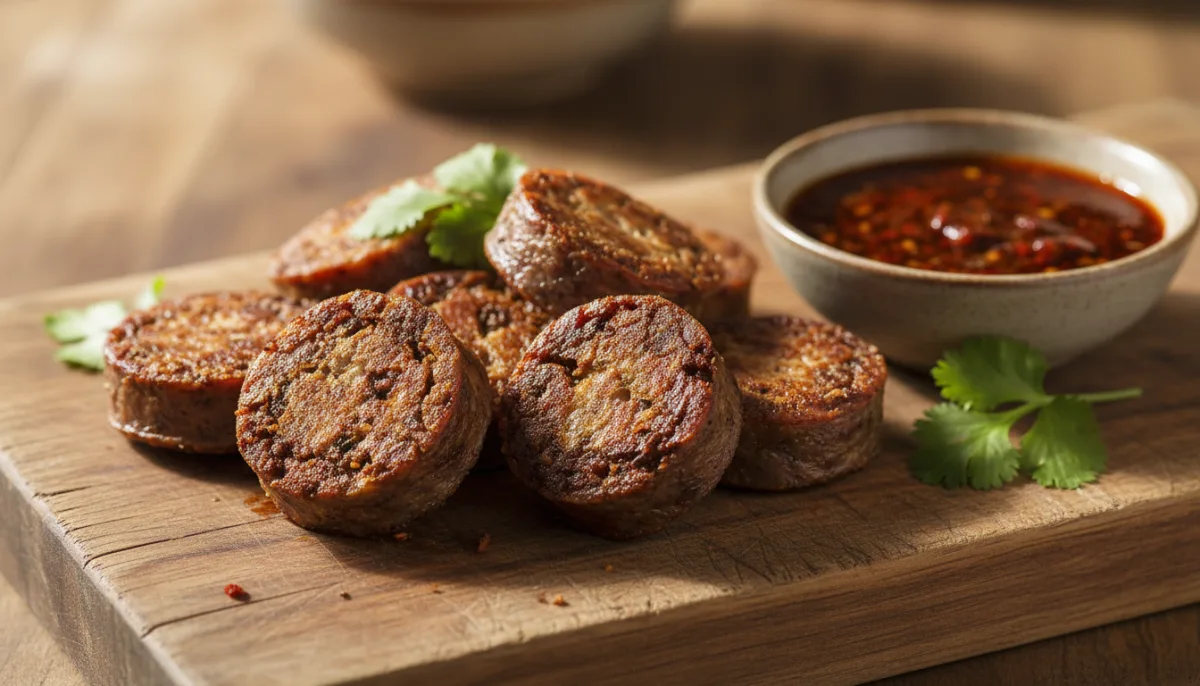
Remove the gyuma from the water and let them cool slightly. Slice the gyuma into 1-inch thick rounds.

06

Heat a large skillet over medium-high heat. Add the sliced gyuma and pan-fry for 5-7 minutes per side, until the exterior is slightly crispy and browned.

About This Recipe

Delve into the rich culinary heritage of the Himalayas with this authentic recipe for Gyuma, a traditional blood sausage. This hearty dish combines savory minced meat, fluffy rice, and a fragrant blend of spices, offering a truly unique and satisfying taste of Tibetan cuisine.
Himalayan Blood Sausage with Rice and Aromatic Spices
Simple ingredients.
Big flavor.
✦
♨

Chef's Tips

To prevent the casings from bursting, prick them gently with a needle a few times before simmering. This allows steam to escape. Ensure the water is simmering, not boiling vigorously, for even cooking.
↔

Easy Substitutions

If hog casings are unavailable, you can form the mixture into patties and pan-fry them, though the texture will be different. Ground beef can be used instead of ground pork. For a vegetarian version, use mushrooms and lentils instead of meat and blood, and form into patties.
▱

Storage & Reheating

Store cooked gyuma in an airtight container in the refrigerator for up to 3 days. Reheat gently in a skillet over medium heat until warmed through.

Serving Suggestions

Serve Tibetan Gyuma hot with a side of steamed vegetables like bok choy or spinach. It pairs wonderfully with a spicy chili sauce or a simple garlic-ginger dipping sauce. You can also enjoy it with a fresh cucumber salad or a bowl of clear broth.

Common Mistakes

Overfilling casings: This will cause them to burst during simmering. Fill them loosely. Boiling too vigorously: A rolling boil can cause the casings to break. Maintain a gentle simmer. Not cooking long enough: The rice needs sufficient time to cook through. Ensure the sausages are firm to the touch. Not seasoning adequately: Blood sausage benefits from bold spices; don't be shy with the ginger, garlic, and peppercorns.

Frequently Asked Questions

Can I use dried blood instead of fresh?

Fresh blood is highly recommended for authentic flavor and texture. Dried blood may alter the taste and consistency significantly.


What if I can't find hog casings?

You can form the mixture into patties and pan-fry them, or use a sausage stuffer with alternative casings if available.

Is gyuma spicy?

This recipe uses Sichuan peppercorns for a mild, aromatic heat. You can adjust the amount to your preference or add fresh chilies for more spice.

How do I know when the gyuma is cooked?

The sausages will feel firm to the touch, and when sliced, the rice should be tender and fully cooked.
MORE TO KNOW
Gyuma is a staple in Tibetan cuisine, often prepared during special occasions or colder months. The use of fresh blood provides a rich, earthy flavor and a unique texture. The combination of rice and spices makes it a complete and satisfying meal. Sourcing fresh blood from a trusted butcher is crucial for both safety and flavor.
WHAT PEOPLE THINK

Reviews

☆

No reviews yet

Be the first person to review this recipe.

SHARE YOUR THOUGHTS

Made this recipe?

Tell us how it turned out.

Your review will be checked before appearing publicly.