Home › Recipes › Dessert ›Singaporean ›Singaporean Ondeh-Ondeh (Pandan Glutinous Rice Balls) with Gula Melaka Filling
DESSERT

Singaporean Ondeh-Ondeh (Pandan Glutinous Rice Balls) with Gula Melaka Filling

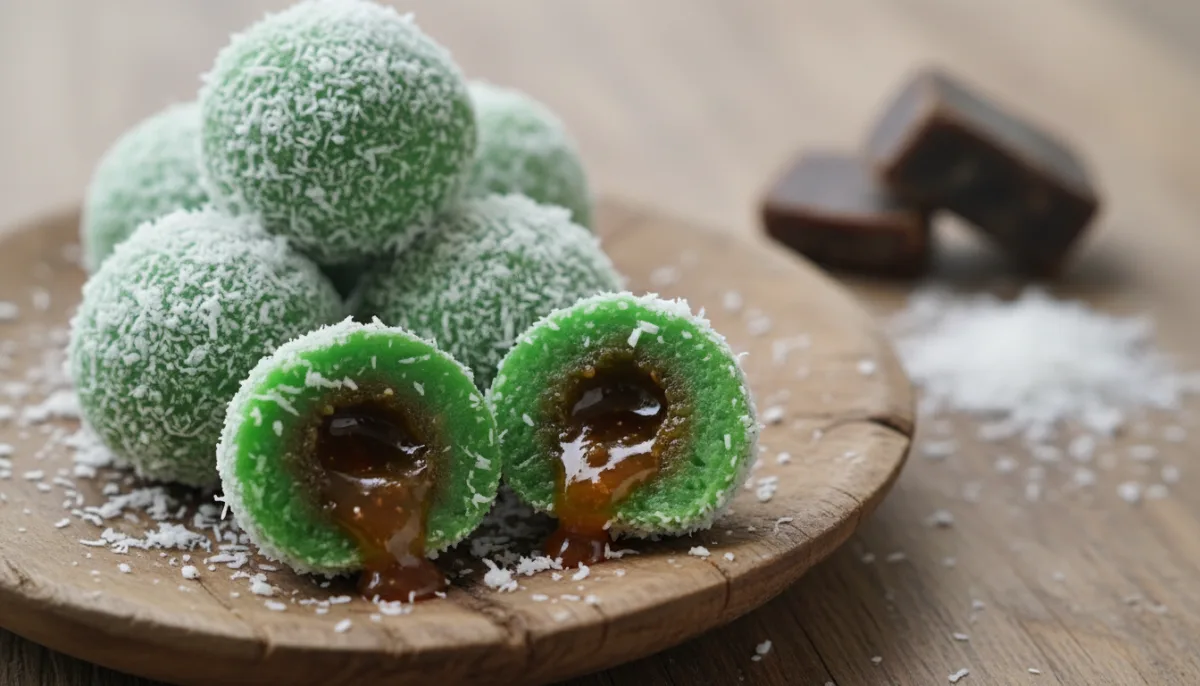
These vibrant green glutinous rice balls are a beloved Singaporean dessert, bursting with the rich, caramel-like sweetness of melted gula melaka and coated in fresh grated coconut. Each bite offers a delightful chewiness and an explosion of flavor.

✎
HOW TO MAKE IT

Let's cook.

01

Combine the glutinous rice flour and tapioca flour in a large mixing bowl. Gradually add the pandan juice and water, mixing until a soft, pliable dough forms. Add a little more water if the dough is too dry, or a little more glutinous rice flour if it's too sticky.

02

Take a small piece of dough, about 1 tablespoon, and flatten it into a disc. Place about 1/2 teaspoon of finely chopped gula melaka in the center. Carefully seal the dough around the gula melaka, rolling it into a smooth ball.

03

Bring a pot of water to a rolling boil over high heat. Gently drop the ondeh-ondeh balls into the boiling water. Cook for 3-5 minutes, or until the balls float to the surface and appear slightly translucent.

04

While the ondeh-ondeh are cooking, steam the fresh grated coconut. Place the grated coconut and 1/4 teaspoon salt in a steamer basket. Steam over medium-high heat for 5 minutes to soften and lightly season the coconut.

05

Once the ondeh-ondeh float, use a slotted spoon to remove them from the boiling water. Immediately transfer them to the steamed grated coconut. Gently roll each ball in the coconut until fully coated.

06

Serve the Singaporean Ondeh-Ondeh warm, allowing the melted gula melaka to ooze out with each bite.

About This Recipe

These vibrant green glutinous rice balls are a beloved Singaporean dessert, bursting with the rich, caramel-like sweetness of melted gula melaka and coated in fresh grated coconut. Each bite offers a delightful chewiness and an explosion of flavor.
Singaporean Ondeh-Ondeh (Pandan Glutinous Rice Balls) with Gula Melaka Filling
Simple ingredients.
Big flavor.
✦
♨

Chef's Tips

For a more intense pandan flavor, use freshly extracted pandan juice. To extract, blend pandan leaves with a small amount of water and strain. Ensure the gula melaka is finely chopped for easier melting inside the dough.
↔

Easy Substitutions

If fresh pandan leaves are unavailable, use 1/2 teaspoon of pandan paste mixed with 1/2 cup of water. Brown sugar can be used as a substitute for gula melaka, though the flavor will be slightly different. Desiccated coconut can be rehydrated with a little warm water and then steamed if fresh grated coconut is not available.
▱

Storage & Reheating

Ondeh-ondeh are best eaten fresh on the day they are made. If you have leftovers, store them in an airtight container at room temperature for up to 1 day. Reheat briefly in a steamer to soften the dough and melt the gula melaka.

Serving Suggestions

Serve these delightful ondeh-ondeh as a sweet treat after a meal, alongside a cup of hot tea or coffee, or as part of a larger dessert platter for special occasions. They are also excellent as a mid-afternoon snack.

Common Mistakes

Overfilling the dough with gula melaka can cause it to burst during cooking, leading to a messy filling. Not sealing the dough properly around the gula melaka will also cause leakage. Overcooking the ondeh-ondeh can make them too soft and mushy, losing their characteristic chewiness. Not steaming the coconut can result in dry, unappealing coating that doesn't stick well.

Frequently Asked Questions

Can I make the dough ahead of time?

It's best to make the dough and cook the ondeh-ondeh fresh. If you must prepare it ahead, wrap the dough tightly in plastic wrap and refrigerate for up to 1 day. Let it come to room temperature before shaping.


Why did my ondeh-ondeh turn out hard?

This usually happens if the dough was too dry or if they were overcooked. Ensure your dough is soft and pliable, and cook only until they float and are slightly translucent.

Can I freeze ondeh-ondeh?

Freezing is not recommended as it can significantly alter the texture of the glutinous rice balls, making them less enjoyable upon reheating.
MORE TO KNOW
The key to perfect ondeh-ondeh lies in the dough consistency. It should be soft and pliable, easy to work with, and not too sticky. If your dough cracks when forming the balls, it's too dry; add a tiny bit more water. If it's too wet and hard to handle, add a touch more glutinous rice flour. The steaming of the coconut is crucial as it softens the coconut and helps it adhere better to the warm ondeh-ondeh, preventing it from drying out. This also lightly seasons the coconut, enhancing the overall flavor profile.
WHAT PEOPLE THINK

Reviews

☆

No reviews yet

Be the first person to review this recipe.

SHARE YOUR THOUGHTS

Made this recipe?

Tell us how it turned out.

Your review will be checked before appearing publicly.