Home › Recipes › Dinner ›Singaporean ›Singaporean Char Kway Teow (Stir-fried Flat Rice Noodles)
DINNER

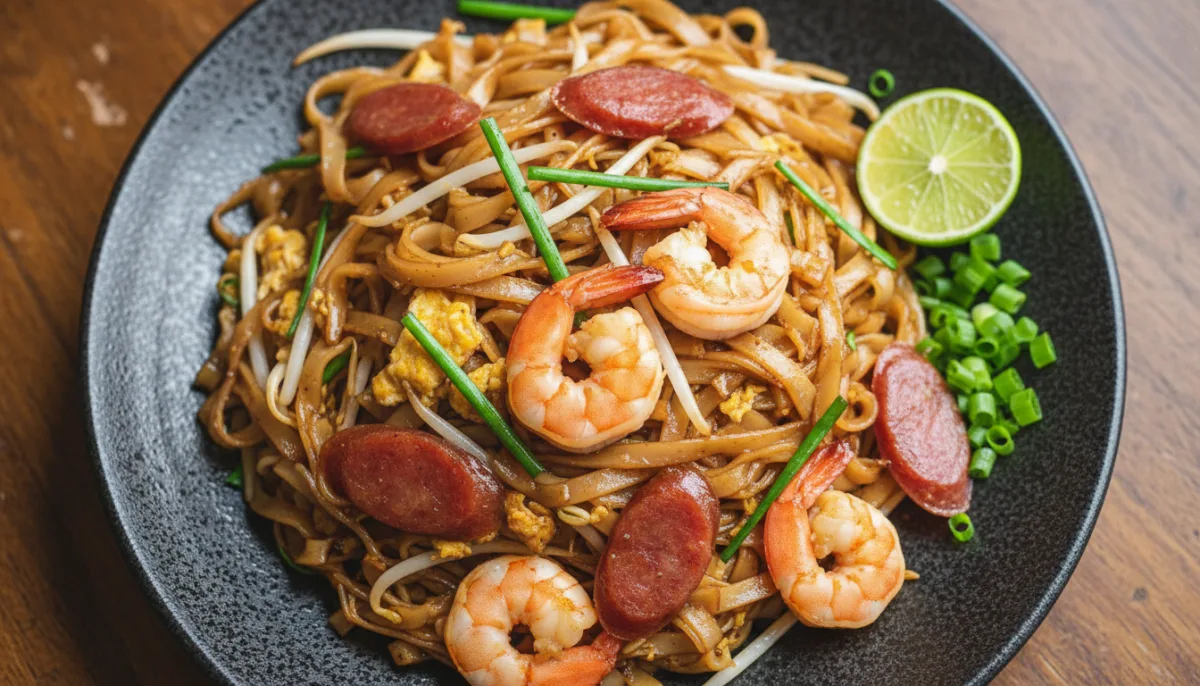
Singaporean Char Kway Teow (Stir-fried Flat Rice Noodles)

Experience the vibrant flavors of Singapore with this authentic Char Kway Teow recipe. This stir-fried flat rice noodle dish is packed with savory, smoky goodness and a hint of sweetness, perfect for a satisfying dinner.

✎
HOW TO MAKE IT

Let's cook.

01

Prepare the noodles: If using fresh noodles, separate them gently to prevent clumping. If using dried noodles, soak them in hot water for 10-15 minutes until pliable, then drain.

02

Mix the sauce: In a small bowl, combine the dark soy sauce, light soy sauce, chili paste, sugar, and white pepper. Stir well and set aside.

03

Heat the wok: Heat 1 tablespoon of cooking oil in a large wok or skillet over high heat until smoking. Add the minced garlic and stir-fry for 15 seconds until fragrant.

04

Cook proteins: Add the shrimp and Chinese sausage to the wok. Stir-fry for 2-3 minutes until the shrimp turn pink and the sausage is slightly caramelized.

05

Add noodles and sauce: Add the flat rice noodles to the wok. Pour the prepared sauce over the noodles and stir-fry vigorously for 2-3 minutes, ensuring the noodles are evenly coated and slightly charred. This creates the characteristic 'wok hei' (breath of the wok).

06

Incorporate vegetables and egg: Push the noodles to one side of the wok. Add the remaining 1 tablespoon of cooking oil to the empty side. Crack the egg into the oil and scramble it quickly. Once the egg is mostly cooked, mix it into the noodles.

07

Finish the dish: Add the bean sprouts and chives to the wok. Stir-fry for another 1-2 minutes until the vegetables are just tender-crisp. Serve immediately.

About This Recipe

Experience the vibrant flavors of Singapore with this authentic Char Kway Teow recipe. This stir-fried flat rice noodle dish is packed with savory, smoky goodness and a hint of sweetness, perfect for a satisfying dinner.
Singaporean Char Kway Teow (Stir-fried Flat Rice Noodles)
Simple ingredients.
Big flavor.
✦
♨

Chef's Tips

For an authentic smoky flavor, ensure your wok is very hot before adding ingredients. Don't overcrowd the wok; cook in batches if necessary to maintain high heat. Use fresh, good quality flat rice noodles for the best texture.
↔

Easy Substitutions

You can substitute shrimp with sliced chicken, fish cake, or firm tofu. Cockles are traditionally used but can be omitted if unavailable. Adjust chili paste to your preferred spice level. For a vegetarian version, omit the shrimp and Chinese sausage, and use extra firm tofu or mushrooms.
▱

Storage & Reheating

Store leftover Char Kway Teow in an airtight container in the refrigerator for up to 2 days. Reheat in a wok or microwave, adding a splash of water to prevent drying out.

Serving Suggestions

Serve hot as a standalone meal. Pair with a refreshing glass of iced calamansi juice. Garnish with extra fresh chives and a lime wedge. A side of pickled green chilies can add an extra tangy crunch.

Common Mistakes

Overcrowding the wok: This lowers the temperature, steaming the noodles instead of stir-frying them, preventing 'wok hei'. Cook in batches if needed. Overcooking the noodles: Fresh flat rice noodles cook quickly; overcooking makes them mushy. Not separating noodles: Noodles can clump together if not gently separated before cooking. Insufficient heat: A lukewarm wok will result in soggy, rather than charred, noodles. Forgetting the sauce: Add the sauce after the proteins and before the noodles to ensure even coating and flavor distribution.

Frequently Asked Questions

Can I use dried flat rice noodles?

Yes, soak them in hot water until pliable, then drain thoroughly before use.

What is 'wok hei'?

'Wok hei' translates to 'breath of the wok' and refers to the unique smoky, charred aroma and flavor imparted to food cooked in a well-seasoned wok over high heat.

Can I make this vegetarian?

Absolutely! Omit the shrimp and Chinese sausage, and add extra firm tofu, shiitake mushrooms, or other vegetables like carrots or cabbage.
MORE TO KNOW
Achieving 'wok hei' (the smoky, charred flavor) is key to authentic Char Kway Teow. This is best done with a very hot wok and quick, continuous stir-frying. If you don't have a powerful burner, cook in smaller batches to prevent the temperature from dropping too much. The dark soy sauce provides color and a deeper savory note, while light soy sauce adds saltiness. The chili paste brings the essential spicy kick.
WHAT PEOPLE THINK

Reviews

☆

No reviews yet

Be the first person to review this recipe.

SHARE YOUR THOUGHTS

Made this recipe?

Tell us how it turned out.

Your review will be checked before appearing publicly.