Home › Recipes › Breakfast ›New Zealand ›New Zealand Creamy Rice Pudding with Manuka Honey and Berries
BREAKFAST

New Zealand Creamy Rice Pudding with Manuka Honey and Berries

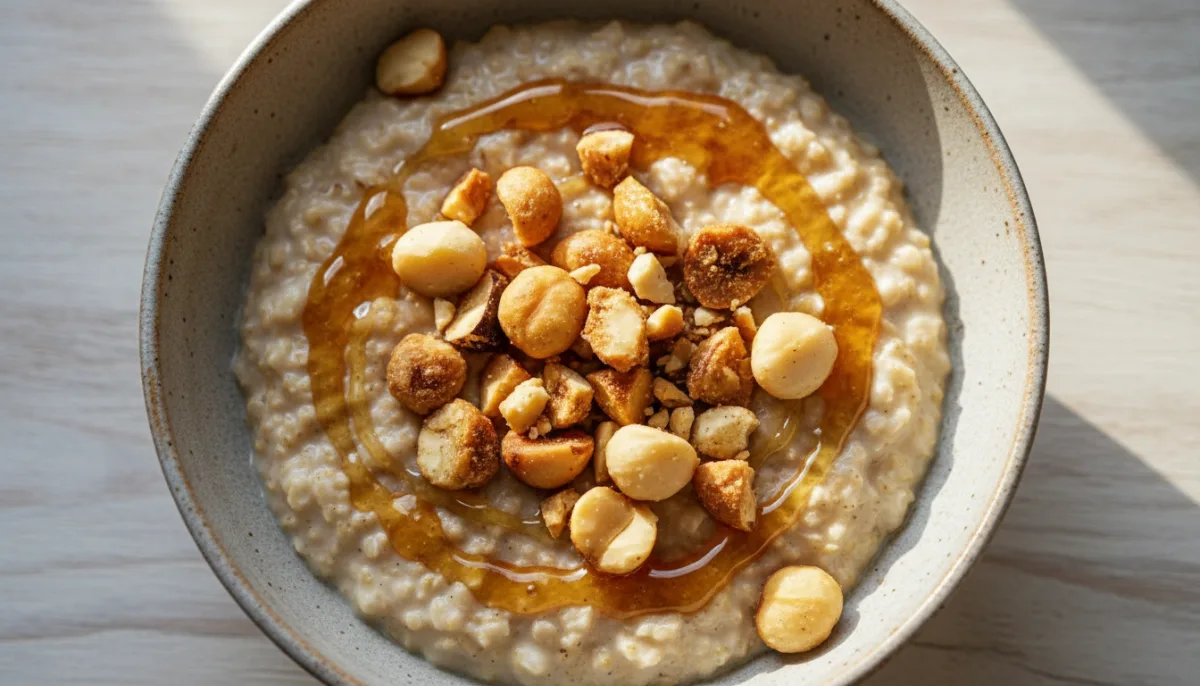
Indulge in a comforting bowl of New Zealand Creamy Rice Pudding, sweetened with aromatic Manuka honey and topped with a vibrant medley of fresh berries. This breakfast recipe offers a taste of Kiwi comfort, perfect for a cozy morning.

✎
HOW TO MAKE IT

Let's cook.

01

Rinse the short-grain rice under cold water until the water runs clear. This helps prevent stickiness.

02

In a medium saucepan, combine the rinsed rice, full-fat milk, and salt. Bring the mixture to a gentle simmer over medium heat, stirring occasionally to prevent the rice from sticking to the bottom.

03

Once simmering, reduce the heat to low, cover the saucepan, and cook for 20-25 minutes, stirring every 5 minutes. The rice should be tender and most of the milk absorbed, creating a creamy consistency.

04

Remove the saucepan from the heat. Stir in the Manuka honey and vanilla extract until well combined. Let the pudding sit, covered, for 5 minutes to allow the flavors to meld and the pudding to thicken slightly.

05

Divide the warm rice pudding among serving bowls. Top generously with fresh mixed berries before serving.

About This Recipe

Indulge in a comforting bowl of New Zealand Creamy Rice Pudding, sweetened with aromatic Manuka honey and topped with a vibrant medley of fresh berries. This breakfast recipe offers a taste of Kiwi comfort, perfect for a cozy morning.
New Zealand Creamy Rice Pudding with Manuka Honey and Berries
Simple ingredients.
Big flavor.
✦
♨

Chef's Tips

For an extra creamy texture, stir in 1/4 cup of heavy cream or coconut cream during the last 5 minutes of cooking. Adjust the amount of Manuka honey to your sweetness preference.
↔

Easy Substitutions

Regular honey or maple syrup can be used instead of Manuka honey. Any type of milk (almond, soy, oat) can replace full-fat milk, though the creaminess may vary. Other fruits like sliced banana or stone fruit can be used in place of berries.
▱

Storage & Reheating

Store leftover rice pudding in an airtight container in the refrigerator for up to 3 days. Reheat gently on the stovetop with a splash of milk if it has thickened too much.

Serving Suggestions

Serve warm for breakfast or as a comforting dessert. A sprinkle of toasted coconut flakes or chopped nuts can add extra texture. A dollop of Greek yogurt or a drizzle of extra Manuka honey can also enhance the experience.

Common Mistakes

1. Not rinsing the rice: This can lead to a gummy, overly starchy pudding. Always rinse your rice. 2. Cooking on high heat: This causes the milk to evaporate too quickly and the rice to cook unevenly or burn. Keep the heat low and gentle. 3. Not stirring frequently enough: The rice will stick to the bottom of the pan and burn. Stir every few minutes. 4. Adding honey too early: High heat can degrade the beneficial properties and flavor of Manuka honey. Add it after cooking. 5. Overcooking: The pudding can become too thick and dry. Remove from heat once the rice is tender and creamy.

Frequently Asked Questions

Can I use long-grain rice for this recipe?

While you can, short-grain rice is recommended for its higher starch content, which results in a creamier pudding. Long-grain rice will yield a less creamy, more separate texture.


What is Manuka honey?

Manuka honey is a unique type of honey produced in New Zealand by bees that pollinate the Manuka bush. It's known for its distinct flavor and beneficial properties.

Can I make this dairy-free?

Yes, you can substitute full-fat milk with a dairy-free alternative like full-fat coconut milk or oat milk for a delicious dairy-free version.
MORE TO KNOW
The key to a truly creamy rice pudding is using short-grain rice, which releases more starch, and cooking it slowly over low heat with frequent stirring. This gentle process allows the rice to absorb the milk gradually, resulting in a rich, velvety texture. Manuka honey, unique to New Zealand, adds a distinct earthy sweetness and beneficial properties, elevating this simple dish.
WHAT PEOPLE THINK

Reviews

☆

No reviews yet

Be the first person to review this recipe.

SHARE YOUR THOUGHTS

Made this recipe?

Tell us how it turned out.

Your review will be checked before appearing publicly.