Home › Recipes › Dessert ›Lithuanian ›Lithuanian Curd Cheese Doughnuts (Spurgos) with Powdered Sugar
DESSERT

Lithuanian Curd Cheese Doughnuts (Spurgos) with Powdered Sugar

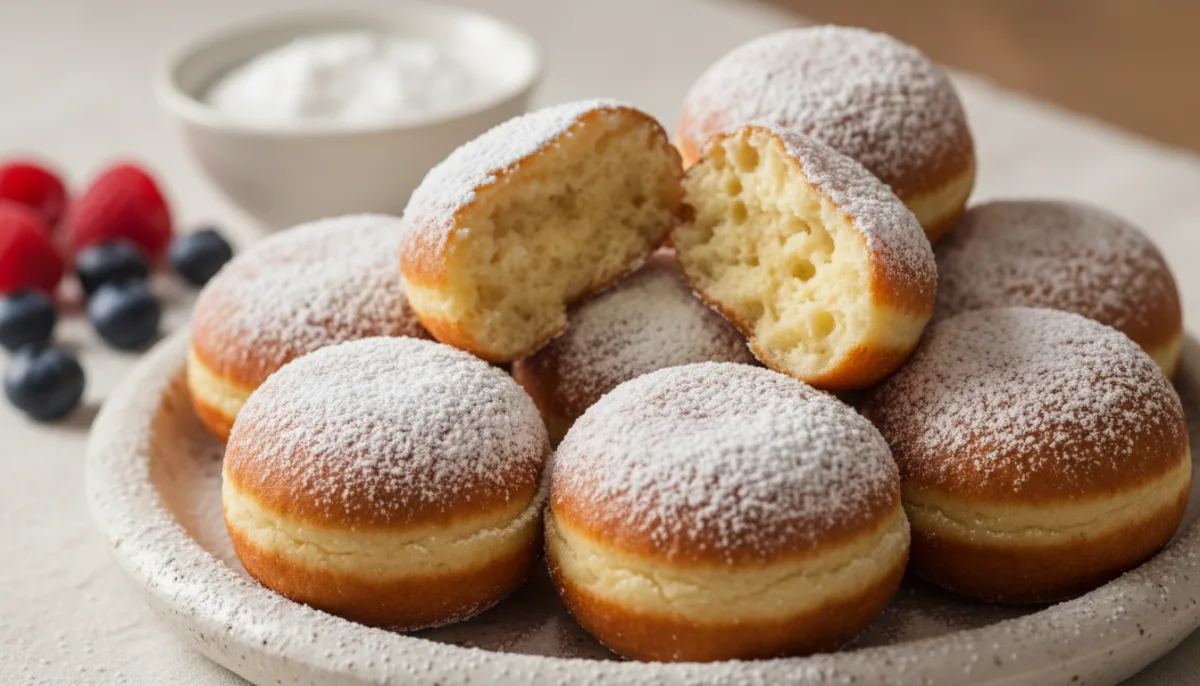
These traditional Lithuanian curd cheese doughnuts, known as Spurgos, are delightfully light and fluffy. Made with fresh curd cheese, they offer a unique tangy sweetness, perfect for a comforting dessert or snack.

✎
HOW TO MAKE IT

Let's cook.

01

In a large bowl, combine 1 cup of fresh curd cheese, 2 large eggs, 1/4 cup of granulated sugar, and 1 teaspoon of vanilla extract. Mix well until smooth.

02

Add 1/2 teaspoon of baking soda and 1/4 teaspoon of salt to the cheese mixture, stirring to combine.

03

Gradually add 1 cup of all-purpose flour to the mixture, mixing until a soft, sticky dough forms. Do not overmix.

04

Heat 4 cups of vegetable oil in a deep pot or Dutch oven over medium-high heat until it reaches 350°F (175°C). Use a candy thermometer to monitor the temperature.

05

Using two spoons or a small ice cream scoop, carefully drop spoonfuls of dough into the hot oil. Fry in batches, ensuring not to overcrowd the pot.

06

Fry the doughnuts for 2-3 minutes per side, or until they are golden brown and cooked through. The internal temperature should reach 200°F (93°C).

07

Remove the fried doughnuts with a slotted spoon and place them on a plate lined with paper towels to drain excess oil.

08

Once slightly cooled, dust the Lithuanian curd cheese doughnuts generously with 1/2 cup of powdered sugar before serving.

About This Recipe

These traditional Lithuanian curd cheese doughnuts, known as Spurgos, are delightfully light and fluffy. Made with fresh curd cheese, they offer a unique tangy sweetness, perfect for a comforting dessert or snack.
Lithuanian Curd Cheese Doughnuts (Spurgos) with Powdered Sugar
Simple ingredients.
Big flavor.
✦
♨

Chef's Tips

Ensure your curd cheese is well-drained to prevent a watery dough. Maintain a consistent oil temperature for even cooking and browning. For best results, serve these doughnuts warm.
↔

Easy Substitutions

If curd cheese is unavailable, ricotta cheese can be used, but ensure it's very well-drained. Granulated sugar can be adjusted to taste. Any neutral frying oil will work.
▱

Storage & Reheating

Store leftover doughnuts in an airtight container at room temperature for up to 2 days. Reheat briefly in a microwave or oven for a softer texture.

Serving Suggestions

Serve these warm Spurgos with a side of berry jam or fruit compote. They also pair wonderfully with a cup of coffee or tea. For a festive touch, offer them with a drizzle of honey or a sprinkle of cinnamon.

Common Mistakes

1. Overmixing the dough: This can lead to tough doughnuts. Mix just until combined. 2. Oil temperature too low: Doughnuts will be greasy. Ensure the oil is at 350°F (175°C). 3. Oil temperature too high: Doughnuts will burn on the outside and be raw inside. Monitor with a thermometer. 4. Overcrowding the pot: This lowers the oil temperature and results in uneven cooking. Fry in small batches. 5. Not draining excess moisture from curd cheese: This can make the dough too wet and difficult to handle.

Frequently Asked Questions

Can I use regular cottage cheese instead of curd cheese?

While similar, cottage cheese has a higher moisture content and different texture. If using, ensure it's thoroughly drained and possibly blended for a smoother consistency.


How do I know if the doughnuts are cooked through?

They should be golden brown on all sides. You can also test one by breaking it open; the inside should be light and fluffy with no raw dough. An internal temperature of 200°F (93°C) indicates doneness.

Can I bake these instead of frying?

This recipe is specifically designed for frying to achieve the traditional Spurgos texture. Baking would result in a different product, more akin to a muffin or scone.
MORE TO KNOW
The key to light and airy Spurgos is the curd cheese. Its natural acidity reacts with the baking soda, creating a tender crumb. Overmixing the dough can develop the gluten too much, resulting in tougher doughnuts. The ideal oil temperature is crucial; too low, and the doughnuts will absorb too much oil and become greasy; too high, and they will brown too quickly on the outside while remaining raw inside. A candy thermometer is highly recommended for this recipe.
WHAT PEOPLE THINK

Reviews

☆

No reviews yet

Be the first person to review this recipe.

SHARE YOUR THOUGHTS

Made this recipe?

Tell us how it turned out.

Your review will be checked before appearing publicly.