Home › Recipes › Breakfast ›Eritrean ›Eritrean Fir-Fir (Spicy Scrambled Eggs with Injera Pieces)
BREAKFAST

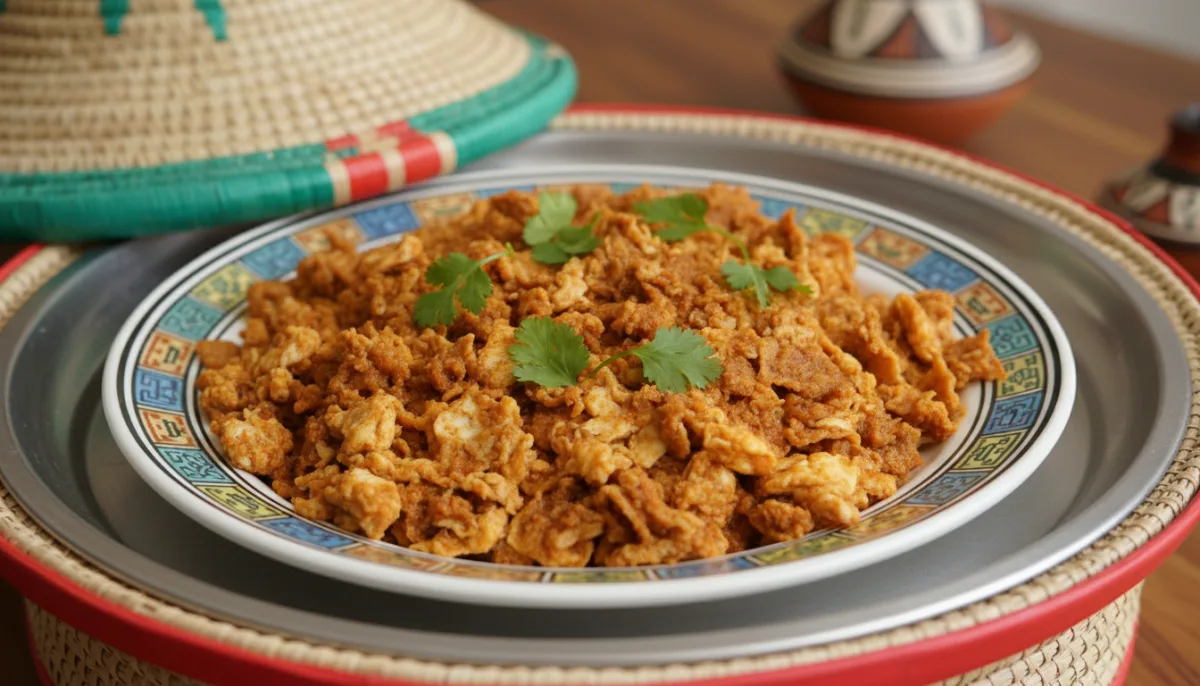
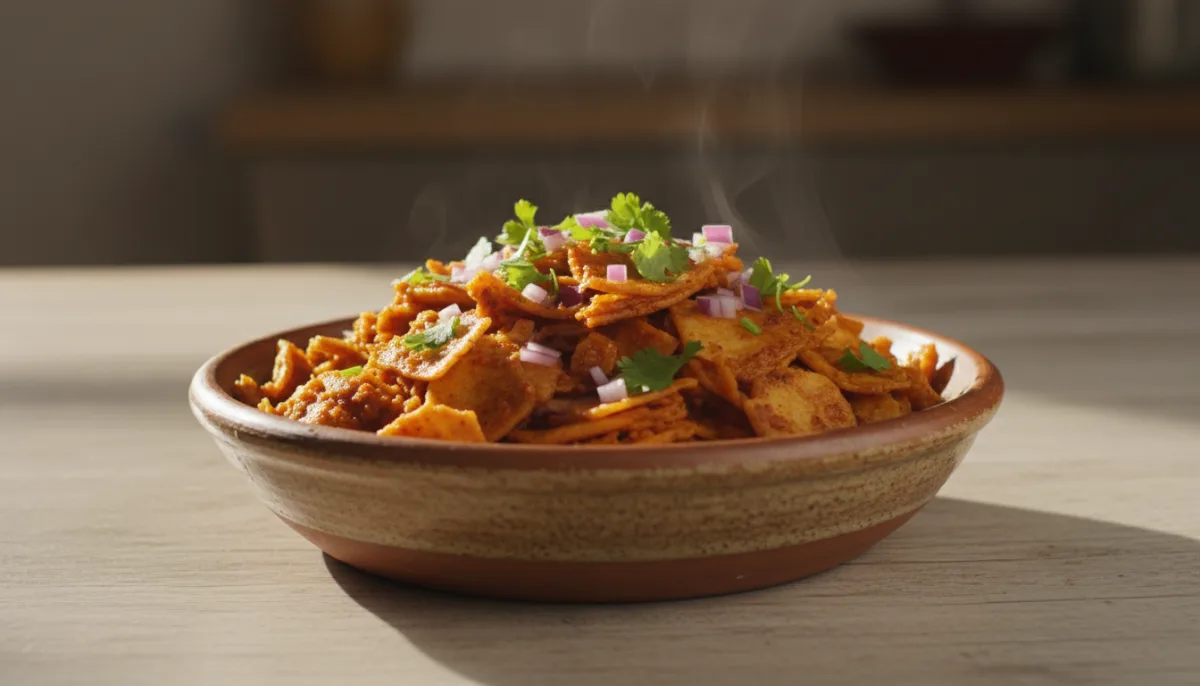
Eritrean Fir-Fir (Spicy Scrambled Eggs with Injera Pieces)

Experience the vibrant flavors of Eritrea with this hearty breakfast. Fir-Fir combines fluffy scrambled eggs with torn injera pieces, all coated in a rich, spicy berbere sauce.

✎
HOW TO MAKE IT

Let's cook.

01

Heat 2 tablespoons of niter kibbeh (or unsalted butter) in a large skillet over medium heat until melted.

02

Add 1/2 cup of finely chopped red onion to the skillet and cook for 3-4 minutes until softened and translucent.

03

Stir in 2 cloves of minced garlic and 1 tablespoon of berbere spice blend. Cook for 1 minute, stirring constantly, until fragrant.

04

In a small bowl, whisk together 4 large eggs, 1/4 teaspoon of salt, and 1/4 teaspoon of black pepper. Pour the egg mixture into the skillet.

05

Scramble the eggs gently for 2-3 minutes until they are just set but still moist.

06

Add 2 pieces of torn injera to the skillet with the scrambled eggs and berbere sauce. Toss gently to coat the injera pieces evenly.

07

Continue to cook for 2-3 minutes, stirring occasionally, allowing the injera to absorb the flavors and soften slightly.

08

Remove from heat and transfer the Eritrean Fir-Fir to serving plates.

09

Garnish with 2 tablespoons of fresh chopped cilantro and serve immediately.

About This Recipe

Experience the vibrant flavors of Eritrea with this hearty breakfast. Fir-Fir combines fluffy scrambled eggs with torn injera pieces, all coated in a rich, spicy berbere sauce.
Eritrean Fir-Fir (Spicy Scrambled Eggs with Injera Pieces)
Simple ingredients.
Big flavor.
✦
♨

Chef's Tips

For an extra kick, add a pinch of red pepper flakes with the berbere. If you don't have niter kibbeh, regular unsalted butter works well, but niter kibbeh adds an authentic, spiced flavor. Ensure your injera is fresh for the best texture.
↔

Easy Substitutions

If injera is unavailable, you can use torn pieces of soft, thin flatbread like lavash or even stale pita bread, though the texture will be different. For a vegetarian option, omit the niter kibbeh and use a plant-based oil. You can also add diced tomatoes or bell peppers with the onion for more vegetables.
▱

Storage & Reheating

Eritrean Fir-Fir is best enjoyed fresh. Leftovers can be stored in an airtight container in the refrigerator for up to 1 day, but the injera may become soggy. Reheat gently in a skillet over low heat, adding a splash of water if needed.

Serving Suggestions

Serve with a side of fresh yogurt or a simple green salad to balance the spice. A cup of strong Eritrean coffee or spiced tea would also complement this breakfast perfectly. For a more substantial meal, you can add a side of stewed lentils (shiro) or a mild vegetable stew.

Common Mistakes

Overcooking the eggs: Scrambled eggs should be just set and moist, not dry and rubbery. Overcooking the berbere: Cooking the berbere for too long on high heat can make it bitter; cook just until fragrant. Using stale or hard injera: Fresh, soft injera is crucial for the right texture. Not tearing injera into small enough pieces: Large pieces will be difficult to mix and eat. Not enough sauce: Ensure there's enough berbere-spiced egg mixture to coat all the injera pieces.

Frequently Asked Questions

What is injera?

Injera is a spongy, sourdough-risen flatbread with a slightly sour taste, traditionally made from teff flour, and is a staple in Eritrean and Ethiopian cuisine.


Can I make Fir-Fir ahead of time?

It's best to eat Fir-Fir fresh, as the injera can become soggy if stored for too long. However, you can prep the ingredients ahead of time.

Where can I find berbere spice blend and niter kibbeh?

These can often be found in African specialty stores, well-stocked international grocery stores, or online. You can also make your own berbere blend from scratch.

Is this dish very spicy?

The spice level depends on the berbere blend used. You can adjust the amount of berbere to your preference, or add a touch of plain paprika for color without extra heat.

Can I use regular butter instead of niter kibbeh?

Yes, unsalted butter can be used as a substitute, but niter kibbeh adds a unique, aromatic depth of flavor that is characteristic of Eritrean cooking.
MORE TO KNOW
Fir-Fir is a staple in Eritrean and Ethiopian cuisine, often served for breakfast or as a light meal. The key to its unique flavor is the berbere spice blend, a complex mixture of chili peppers, garlic, ginger, basil, korarima, rue, and other spices. Niter kibbeh, a spiced clarified butter, also contributes significantly to the authentic taste. When preparing Fir-Fir, the goal is to gently incorporate the injera so it absorbs the spicy, savory sauce without becoming overly mushy. The injera's spongy texture is perfect for soaking up the rich flavors.
WHAT PEOPLE THINK

Reviews

☆

No reviews yet

Be the first person to review this recipe.

SHARE YOUR THOUGHTS

Made this recipe?

Tell us how it turned out.

Your review will be checked before appearing publicly.