Home › Recipes › Breakfast ›Bosnian ›Bosnian Jufka (Thin Flatbread) with Honey and Walnuts
BREAKFAST

Bosnian Jufka (Thin Flatbread) with Honey and Walnuts

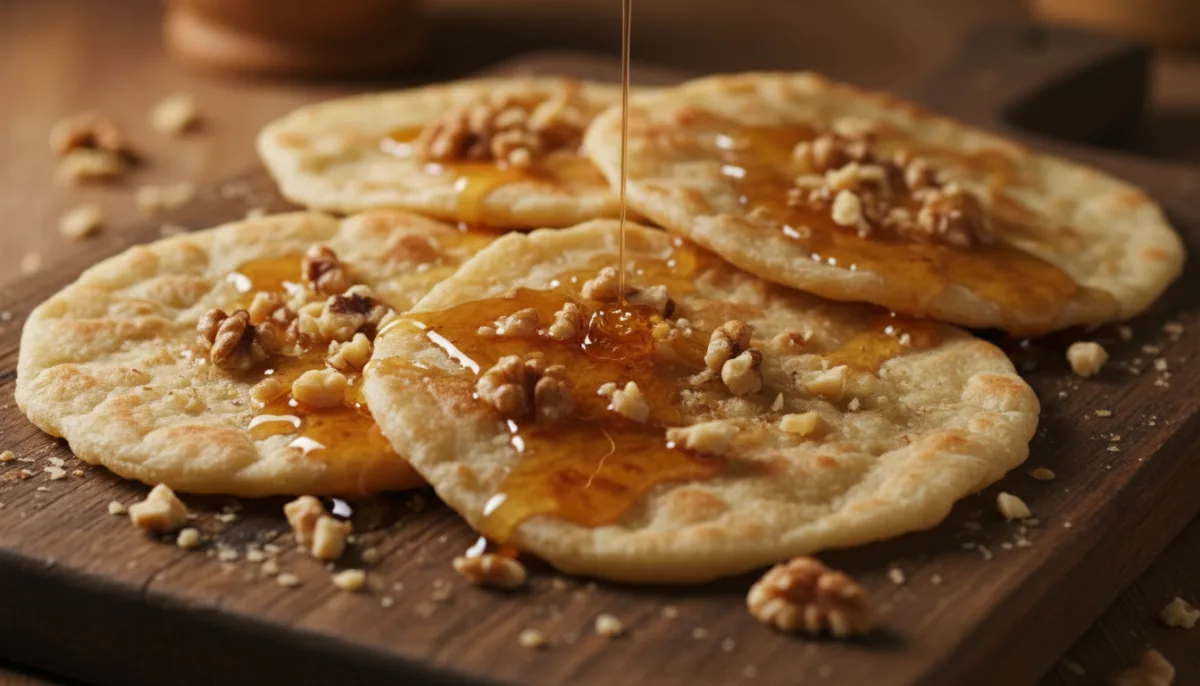
This traditional Bosnian breakfast features delicate, thin flatbreads, known as jufka, drizzled with sweet honey and sprinkled with crunchy walnuts. It's a simple yet satisfying dish, perfect for a cozy morning.

✎
HOW TO MAKE IT

Let's cook.

01

In a large bowl, combine the all-purpose flour and salt. Gradually add the warm water and 2 tablespoons of vegetable oil, mixing until a shaggy dough forms.

02

Turn the dough out onto a lightly floured surface and knead for 5-7 minutes until it is smooth and elastic. Cover the dough with a clean kitchen towel and let it rest for 10 minutes.

03

Divide the dough into 4 equal portions. On a lightly floured surface, roll each portion into a very thin, almost translucent, round flatbread, about 8-10 inches in diameter.

04

Heat a large non-stick skillet or griddle over medium heat. Lightly brush the skillet with vegetable oil.

05

Cook each jufka for 1-2 minutes per side, or until lightly golden brown and cooked through. The flatbreads should be soft and pliable.

06

Transfer the cooked jufka to a plate. Drizzle generously with honey and sprinkle with chopped walnuts. Serve immediately.

About This Recipe

This traditional Bosnian breakfast features delicate, thin flatbreads, known as jufka, drizzled with sweet honey and sprinkled with crunchy walnuts. It's a simple yet satisfying dish, perfect for a cozy morning.
Bosnian Jufka (Thin Flatbread) with Honey and Walnuts
Simple ingredients.
Big flavor.
✦
♨

Chef's Tips

For extra flavor, you can lightly toast the walnuts before chopping them. Adjust the amount of honey and walnuts to your personal preference. You can also add a pinch of cinnamon to the walnuts for a warm spice note.
↔

Easy Substitutions

If you don't have walnuts, almonds or pecans can be used. Maple syrup or agave nectar can substitute honey, though the flavor profile will change. Whole wheat flour can be used for a healthier option, but the texture of the jufka will be denser.
▱

Storage & Reheating

Jufka is best enjoyed fresh. Leftover plain jufka can be stored in an airtight container at room temperature for up to 1 day. Reheat gently in a dry skillet before adding honey and walnuts. Once honey and walnuts are added, it does not store well.

Serving Suggestions

Serve Bosnian Jufka with a side of strong Bosnian coffee or herbal tea. It also pairs wonderfully with a dollop of kaymak (a clotted cream) for a richer breakfast, or alongside fresh fruit like berries or sliced apples.

Common Mistakes

1. Not kneading the dough enough: This results in a tough, less pliable jufka. Knead until smooth and elastic. 2. Not rolling the dough thin enough: Thick jufka will be chewy, not delicate. Aim for almost translucent. 3. Overcooking the jufka: This makes them dry and brittle. Cook until just lightly golden and still soft. 4. Adding honey and walnuts too early: The jufka can become soggy if dressed too far in advance. Dress just before serving. 5. Using cold water for the dough: Warm water helps activate the gluten and makes the dough easier to work with.

Frequently Asked Questions

Can I make the dough ahead of time?

Yes, you can prepare the dough, knead it, and let it rest. Then, wrap it tightly in plastic wrap and refrigerate for up to 24 hours. Bring to room temperature before rolling.


What kind of honey is best for this recipe?

A good quality, local honey will enhance the flavor. Bosnian forest honey or wildflower honey would be traditional, but any mild-flavored honey works well.

Can I use a different type of flour?

While all-purpose flour is traditional, you can experiment with a blend of all-purpose and bread flour for a slightly chewier texture, or a small amount of whole wheat flour for added nuttiness.

Is jufka similar to other flatbreads?

Yes, jufka shares similarities with other thin, unleavened flatbreads found in the Balkans and Middle East, such as yufka in Turkish cuisine or phyllo dough, though jufka is typically thicker than phyllo.
MORE TO KNOW
The key to authentic Bosnian jufka is rolling the dough as thin as possible. This creates a delicate, almost crepe-like texture that perfectly absorbs the honey. Don't be afraid to use plenty of flour on your work surface and rolling pin to prevent sticking. If the dough springs back too much, let it rest for another 5 minutes before continuing to roll. The thinness ensures quick cooking and a tender result.
WHAT PEOPLE THINK

Reviews

☆

No reviews yet

Be the first person to review this recipe.

SHARE YOUR THOUGHTS

Made this recipe?

Tell us how it turned out.

Your review will be checked before appearing publicly.