Home › Recipes › Lunch ›Bolivian ›Bolivian Silpancho: Thinly Sliced Beef with Fried Eggs, Rice, and Potatoes
LUNCH

Bolivian Silpancho: Thinly Sliced Beef with Fried Eggs, Rice, and Potatoes

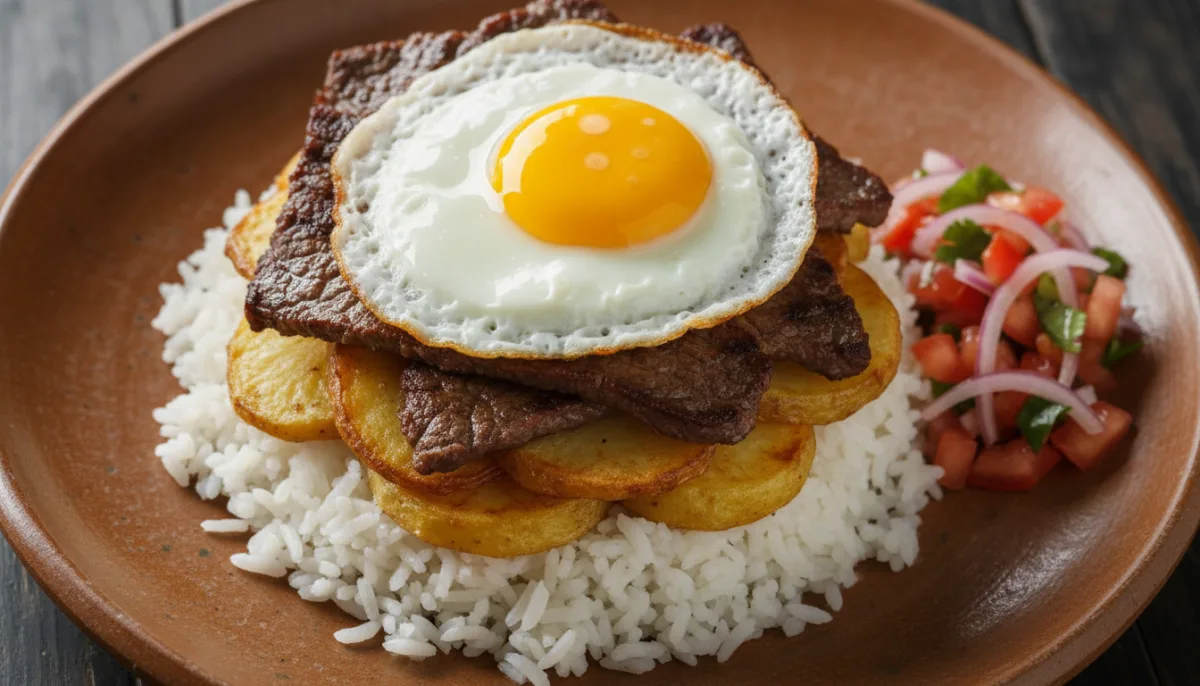
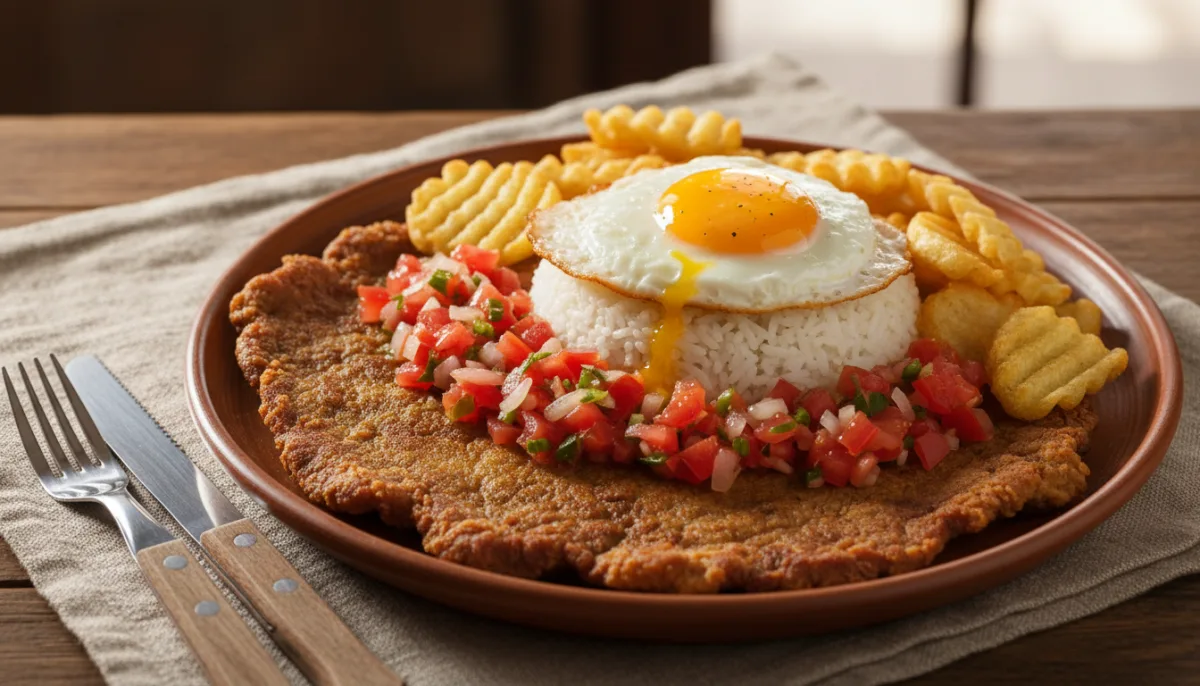
Experience the vibrant flavors of Bolivia with this hearty Silpancho recipe. Thinly sliced beef is pan-fried to perfection, served alongside fluffy rice, crispy potatoes, and topped with a sunny-side-up egg, all complemented by a fresh tomato and onion salsa.

✎
HOW TO MAKE IT

Let's cook.

01

Season the pounded beef slices with garlic powder, cumin, salt, and black pepper. Set aside.

02

Heat 2 tablespoons of vegetable oil in a large skillet over medium-high heat. Fry the thinly sliced potatoes in batches until golden brown and crispy, about 5-7 minutes per batch. Remove and drain on paper towels, seasoning lightly with salt.

03

In the same skillet, add 1 tablespoon of vegetable oil over medium-high heat. Pan-fry the seasoned beef slices in batches for 2-3 minutes per side until cooked through and slightly crispy. Remove and keep warm.

04

In a separate small skillet, heat the remaining 1 tablespoon of vegetable oil over medium heat. Fry the 4 eggs, one at a time, until the whites are set and the yolks are still runny (sunny-side up), about 2-3 minutes per egg.

05

Prepare the salsa by combining the diced tomato, diced red onion, chopped cilantro, and lime juice in a small bowl. Season with a pinch of salt.

06

To assemble, place a generous portion of cooked white rice on each plate. Top with a layer of crispy fried potatoes, then a few slices of the pan-fried beef. Finish each serving with a fried egg and a spoonful of the fresh tomato and onion salsa.

About This Recipe

Experience the vibrant flavors of Bolivia with this hearty Silpancho recipe. Thinly sliced beef is pan-fried to perfection, served alongside fluffy rice, crispy potatoes, and topped with a sunny-side-up egg, all complemented by a fresh tomato and onion salsa.
Bolivian Silpancho: Thinly Sliced Beef with Fried Eggs, Rice, and Potatoes
Simple ingredients.
Big flavor.
✦
♨

Chef's Tips

Pounding the beef very thin is key to achieving the traditional Silpancho texture. Use a meat mallet or the bottom of a heavy pan between two sheets of plastic wrap. For extra flavor, marinate the beef for 30 minutes before frying.
↔

Easy Substitutions

You can use thinly sliced chicken breast instead of beef. For the potatoes, sweet potatoes can be a delicious alternative. If fresh cilantro is unavailable, parsley can be used, though the flavor profile will be slightly different.
▱

Storage & Reheating

Store leftover Silpancho components separately in airtight containers in the refrigerator for up to 2 days. Reheat the beef and potatoes in a skillet for best results; the eggs are best enjoyed fresh.

Serving Suggestions

Serve with a side of spicy Bolivian llajwa (a chili salsa) for an authentic kick. A simple green salad with a light vinaigrette can also complement the richness of the dish. Pair with a refreshing glass of chicha morada (purple corn drink) or a light lager.

Common Mistakes

1. Not pounding the beef thin enough: This results in tough, chewy meat. Ensure the beef is almost paper-thin. 2. Overcrowding the pan: Frying too many potatoes or beef slices at once lowers the oil temperature, leading to soggy rather than crispy results. Fry in batches. 3. Overcooking the eggs: The fried egg should have a runny yolk to mix with the rice and beef. Cook just until the whites are set. 4. Skipping the salsa: The fresh tomato and onion salsa is essential for balancing the rich, fried components.

Frequently Asked Questions

Can I prepare any components ahead of time?

Yes, you can cook the rice and slice the potatoes and beef a day in advance. Store them separately in the refrigerator. The salsa is best made fresh just before serving.


What kind of beef is best for Silpancho?

Sirloin or top round are excellent choices due to their tenderness and ability to be pounded very thin. Flank steak can also work if pounded well.

How spicy is traditional Silpancho?

The dish itself is not inherently spicy, but it is almost always served with llajwa, a spicy Bolivian salsa, which allows diners to adjust the heat to their preference.
MORE TO KNOW
Silpancho is a beloved Bolivian dish, particularly from the Cochabamba region, known for its generous portions and satisfying combination of textures and flavors. The name 'Silpancho' is thought to come from the Quechua word 'sillp'anchu,' meaning 'thin and flat,' referring to the pounded beef. The fresh salsa, often called 'llajwa' or 'salsa criolla,' adds a crucial bright and tangy counterpoint to the rich fried elements.
WHAT PEOPLE THINK

Reviews

☆

No reviews yet

Be the first person to review this recipe.

SHARE YOUR THOUGHTS

Made this recipe?

Tell us how it turned out.

Your review will be checked before appearing publicly.