Home › Recipes › Dessert ›Yemeni ›Yemeni Aseeda: Warm Semolina Pudding with Dates & Cardamom
DESSERT

Yemeni Aseeda: Warm Semolina Pudding with Dates & Cardamom

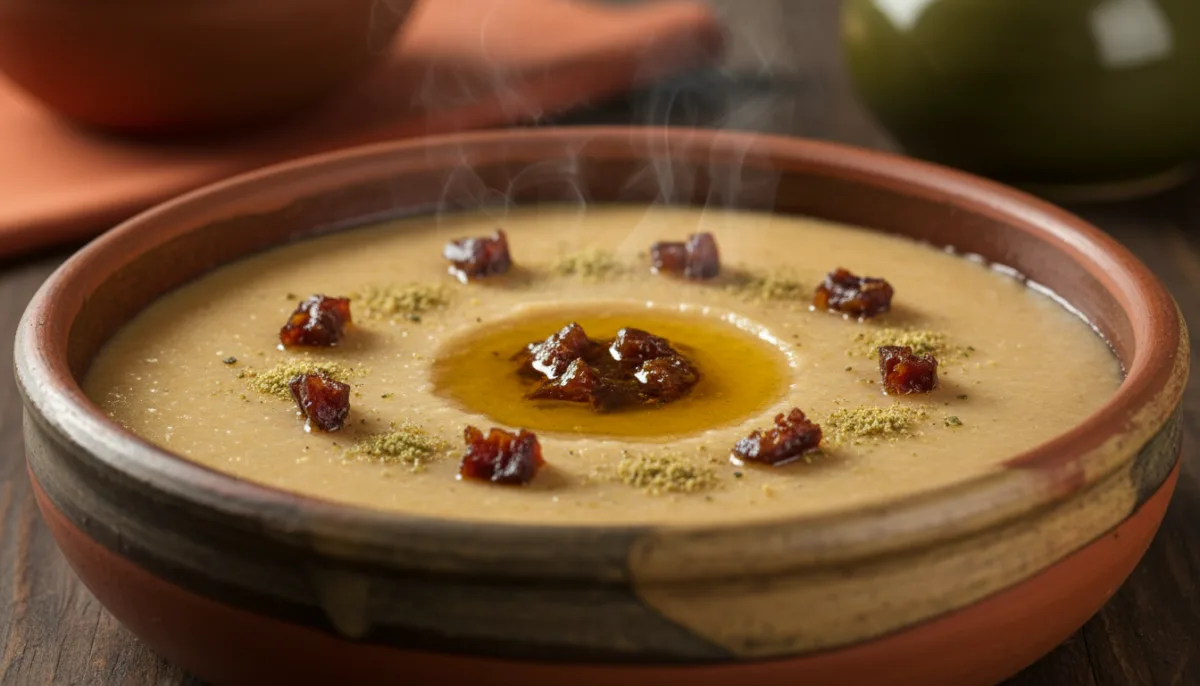
Discover the comforting taste of Yemeni Aseeda, a warm semolina pudding delicately spiced with cardamom and naturally sweetened with dates. This simple yet satisfying dessert is ideal for a cozy evening treat or a nourishing breakfast.

✎
HOW TO MAKE IT

Let's cook.

01

In a large saucepan, bring 4 cups of water to a boil over medium-high heat.

02

Once boiling, reduce the heat to medium-low. Slowly whisk in the 1 cup of fine semolina, 1/2 teaspoon of ground cardamom, and 1/4 teaspoon of salt, stirring constantly to prevent lumps.

03

Continue to stir the mixture over medium-low heat for 10-12 minutes, or until the semolina thickens considerably and pulls away from the sides of the pan.

04

Stir in the 1/2 cup of finely chopped pitted dates and 2 tablespoons of ghee. Cook for another 3-5 minutes, stirring occasionally, until the dates are softened and well incorporated.

05

Remove the aseeda from the heat. Divide it into individual serving bowls. Create a small well in the center of each serving.

06

Drizzle each well with a little extra ghee and, if desired, 1 tablespoon of honey before serving warm.

About This Recipe

Discover the comforting taste of Yemeni Aseeda, a warm semolina pudding delicately spiced with cardamom and naturally sweetened with dates. This simple yet satisfying dessert is ideal for a cozy evening treat or a nourishing breakfast.
Yemeni Aseeda: Warm Semolina Pudding with Dates & Cardamom
Simple ingredients.
Big flavor.
✦
♨

Chef's Tips

For a smoother aseeda, ensure you whisk the semolina slowly into the boiling water to avoid lumps. Adjust the amount of cardamom to your preference. Aseeda can be quite thick; if you prefer a slightly looser consistency, add a splash of warm water or milk at the end of cooking.
↔

Easy Substitutions

You can substitute brown sugar or maple syrup for dates if you prefer, adjusting to taste. Clarified butter can be used instead of ghee. For a dairy-free version, use a plant-based butter alternative.
▱

Storage & Reheating

Store leftover aseeda in an airtight container in the refrigerator for up to 3 days. Reheat gently on the stovetop with a splash of water or milk, stirring until smooth.

Serving Suggestions

Serve warm as a dessert after a meal. Enjoy it for breakfast, perhaps alongside a cup of strong Yemeni coffee. Offer it as a light snack during cooler weather. Garnish with a sprinkle of toasted nuts like almonds or pistachios for added texture.

Common Mistakes

Not whisking the semolina slowly enough can lead to a lumpy texture. Cooking on too high heat can cause the semolina to stick to the bottom of the pan and burn. Not stirring frequently enough can also result in sticking and uneven cooking. Overcooking can make the aseeda too dry and stiff; undercooking will leave it too runny. Forgetting to chop the dates finely can result in uneven sweetness and texture.

Frequently Asked Questions

Can I use coarse semolina instead of fine?

While fine semolina is traditional for a smooth texture, you can use coarse semolina, but it will result in a grittier texture and may require slightly more cooking time and liquid.


Is this dish typically very sweet?

Yemeni Aseeda is moderately sweet, primarily from the dates. You can adjust the sweetness by adding more or less honey or dates to your liking.

Can I make this ahead of time?

Yes, you can make it ahead and store it. Reheat gently on the stovetop, adding a little water or milk to loosen it up if it's too thick.

What is ghee?

Ghee is clarified butter, commonly used in Middle Eastern and Indian cuisines. It has a rich, nutty flavor and a high smoke point.
MORE TO KNOW
Aseeda is a staple in many Middle Eastern and North African cuisines, with variations in ingredients and preparation. The Yemeni version often features dates and cardamom, giving it a distinct aromatic sweetness. The key to a good aseeda is constant stirring during the initial semolina addition to prevent lumps and achieve a creamy, smooth texture. It's traditionally served warm, often with a generous drizzle of ghee and sometimes honey or date syrup, making it a comforting and energy-rich dish.
WHAT PEOPLE THINK

Reviews

☆

No reviews yet

Be the first person to review this recipe.

SHARE YOUR THOUGHTS

Made this recipe?

Tell us how it turned out.

Your review will be checked before appearing publicly.