Home › Recipes › Dinner ›Polish ›Polish Pierogi with Potato and Cheese Filling, Served with Caramelized Onions
DINNER

Polish Pierogi with Potato and Cheese Filling, Served with Caramelized Onions

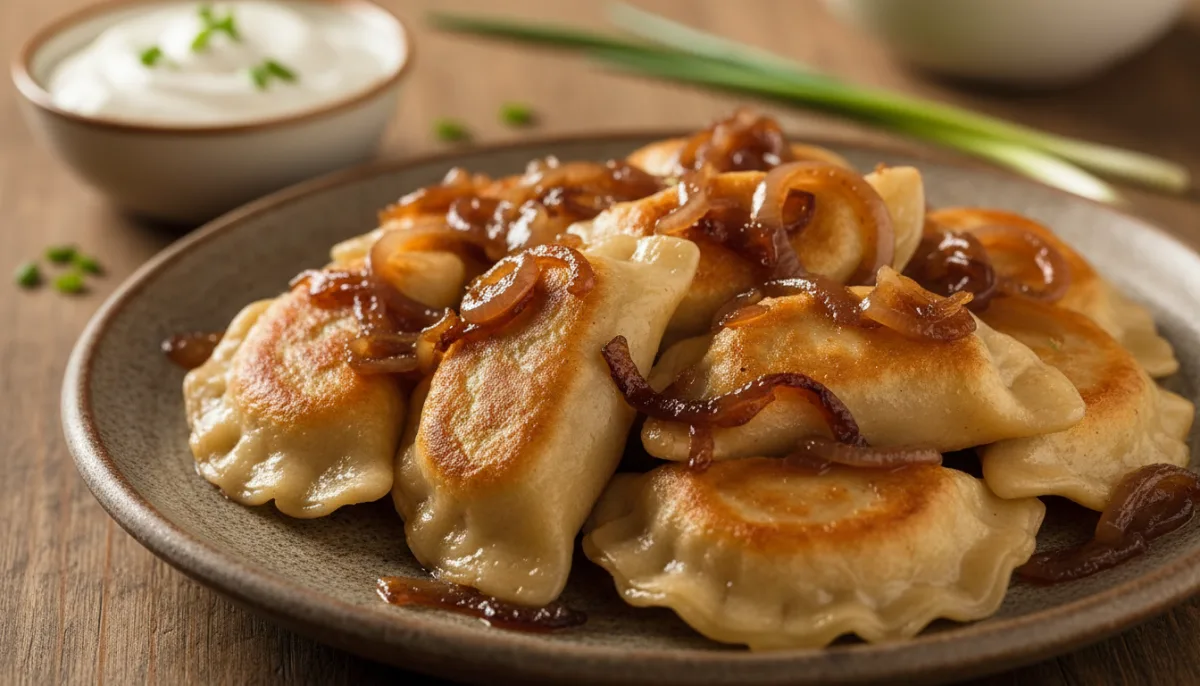
These classic Polish pierogi feature a tender, homemade dough filled with creamy mashed potatoes and savory farmer's cheese. They are boiled until tender, then pan-fried to a golden crisp and served with sweet, deeply caramelized onions for a truly comforting and authentic meal.

✎
HOW TO MAKE IT

Let's cook.

01

For the dough, combine 3 cups all-purpose flour and 1 teaspoon salt in a large bowl. In a separate bowl, whisk 1 large egg with 1 cup warm water. Gradually add the wet ingredients to the dry, mixing until a shaggy dough forms. Turn onto a lightly floured surface and knead for 5-7 minutes until smooth and elastic. Cover with a clean kitchen towel and let rest for 30 minutes.

02

For the filling, peel and cut 2 pounds Russet potatoes into 1-inch cubes. Boil in salted water for 15-20 minutes until very tender. Drain well and mash thoroughly. Add 1 cup farmer's cheese, 1/2 teaspoon black pepper, and salt to taste. Mix until well combined and smooth. Set aside to cool completely.

03

While the dough rests and filling cools, prepare the caramelized onions. Slice 2 large yellow onions thinly. Melt 2 tablespoons unsalted butter in a large skillet over medium-low heat. Add the sliced onions and cook for 25-30 minutes, stirring occasionally, until deeply golden brown and very soft.

04

Divide the rested dough into two portions. On a lightly floured surface, roll out one portion to about 1/8-inch thickness. Use a 3-inch round cookie cutter or glass rim to cut out circles. Place about 1 teaspoon of the potato and cheese filling in the center of each circle. Fold the dough over and pinch the edges firmly to seal, creating a half-moon shape.

05

Bring a large pot of salted water to a rolling boil. Carefully drop the pierogi into the boiling water, working in batches to avoid overcrowding. Cook for 2-3 minutes after they float to the surface, ensuring the dough is cooked through. Remove with a slotted spoon and drain well.

06

In a separate large skillet, melt the remaining 2 tablespoons unsalted butter over medium heat. Add the boiled pierogi in a single layer and pan-fry for 2-3 minutes per side, until golden brown and slightly crispy. Repeat with remaining pierogi.

07

Serve the pan-fried pierogi immediately, topped generously with the caramelized onions.

About This Recipe

These classic Polish pierogi feature a tender, homemade dough filled with creamy mashed potatoes and savory farmer's cheese. They are boiled until tender, then pan-fried to a golden crisp and served with sweet, deeply caramelized onions for a truly comforting and authentic meal.
Polish Pierogi with Potato and Cheese Filling, Served with Caramelized Onions
Simple ingredients.
Big flavor.
✦
♨

Chef's Tips

Ensure the pierogi dough is well-sealed to prevent the filling from escaping during boiling. If the dough is too dry, add a tiny bit more water; if too sticky, add a little more flour. For extra flavor, you can add a pinch of nutmeg to the potato and cheese filling.
↔

Easy Substitutions

Ricotta cheese can be used in place of farmer's cheese for a slightly different texture. For a richer flavor, you can use bacon fat instead of butter for frying the pierogi and caramelizing the onions. Whole wheat flour can be substituted for up to half of the all-purpose flour for a nuttier dough.
▱

Storage & Reheating

Cooked pierogi can be stored in an airtight container in the refrigerator for up to 3 days. Reheat by pan-frying or boiling briefly. Uncooked pierogi can be frozen on a floured baking sheet until solid, then transferred to a freezer bag for up to 3 months. Cook from frozen in boiling water until they float and are tender.

Serving Suggestions

Serve with a dollop of sour cream or plain Greek yogurt. A side of crispy bacon bits or fried kielbasa can complement the dish. For a lighter touch, a simple cucumber salad with dill and sour cream pairs wonderfully. A sprinkle of fresh chopped chives or parsley adds a nice pop of color and freshness.

Common Mistakes

1. Overfilling the pierogi: This makes them difficult to seal and prone to bursting during boiling. Use about 1 teaspoon of filling per pierogi. 2. Not sealing the edges properly: This leads to the filling leaking out into the boiling water. Press the edges firmly, and consider crimping with a fork for extra security. 3. Overcrowding the pot: Boiling too many pierogi at once lowers the water temperature and can make them stick together. Cook in small batches. 4. Not cooling the filling: Warm filling can make the dough sticky and harder to work with. Ensure the potato and cheese mixture is completely cool before filling. 5. Rushing the caramelization of onions: True caramelized onions take time. Cooking them too quickly over high heat will burn them rather than sweeten them.

Frequently Asked Questions

Can I make the pierogi dough ahead of time?

Yes, the dough can be made up to 24 hours in advance and stored, tightly wrapped, in the refrigerator. Let it come to room temperature for about 30 minutes before rolling.


What kind of potatoes are best for the filling?

Starchy potatoes like Russet or Idaho are ideal as they mash up light and fluffy, creating a smooth filling.

Can I use a different type of cheese?

While farmer's cheese is traditional, you can experiment with dry cottage cheese, ricotta, or even a blend of cheddar and mozzarella for a different flavor profile.

How do I prevent pierogi from sticking after boiling?

After boiling, toss the pierogi gently with a small amount of melted butter or oil to prevent them from sticking to each other before pan-frying.

What if my dough is too tough?

If your dough feels tough, it might be overworked or not rested enough. Ensure you knead for the recommended time and allow it to rest fully. Adding a tiny bit more warm water during kneading can also help.
MORE TO KNOW
The key to perfect pierogi lies in the dough. It should be soft and pliable, but not sticky. Overworking the dough can make it tough, so knead just until it's smooth and elastic. The resting period is crucial as it allows the gluten to relax, making the dough easier to roll out thinly without shrinking back. When sealing the pierogi, ensure there's no filling on the edges, as this can prevent a tight seal. A small amount of water on the dough edges can help them stick together better. For the caramelized onions, patience is key; low and slow cooking develops their deep sweetness and rich color.
WHAT PEOPLE THINK

Reviews

☆

No reviews yet

Be the first person to review this recipe.

SHARE YOUR THOUGHTS

Made this recipe?

Tell us how it turned out.

Your review will be checked before appearing publicly.