Home › Recipes › Dinner ›Puerto Rican ›Pastelón de Carne: Puerto Rican Sweet Plantain & Beef Casserole
DINNER

Pastelón de Carne: Puerto Rican Sweet Plantain & Beef Casserole

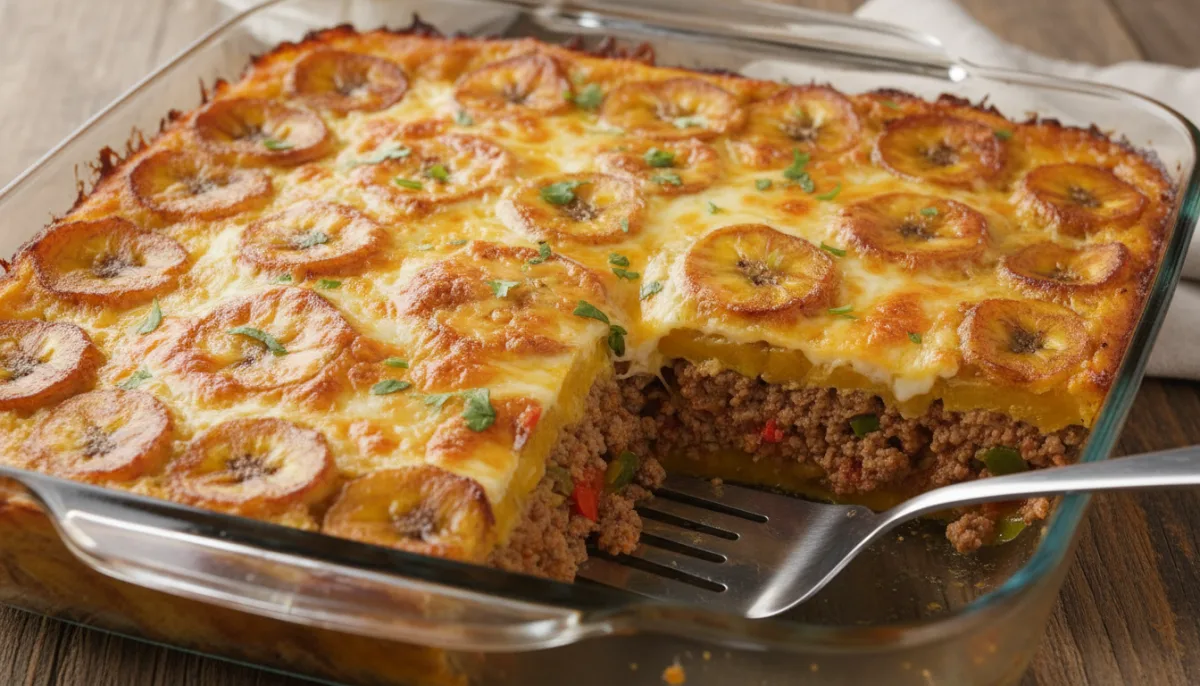
Discover the comforting flavors of Pastelón de Carne, a cherished Puerto Rican dish. This hearty casserole layers seasoned ground beef, tender fried sweet plantains, and a rich tomato sauce, all baked until golden with a bubbly cheese topping. It's a savory delight where ripe plantains beautifully replace traditional pasta.

✎
HOW TO MAKE IT

Let's cook.

01

Peel the ripe plantains and slice them lengthwise into 1/4-inch thick pieces. Heat 2 cups of vegetable oil in a large skillet over medium-high heat. Fry the plantain slices in batches for 2-3 minutes per side until golden brown and tender. Remove with a slotted spoon and place on paper towels to drain excess oil. Set aside.

02

In a large skillet, heat 1 tablespoon of olive oil over medium heat. Add the chopped onion and green bell pepper, cooking for 5 minutes until softened. Add the minced garlic and cook for 1 minute more until fragrant.

03

Add the ground beef to the skillet, breaking it apart with a spoon. Cook for 8-10 minutes until browned, then drain any excess fat. Stir in the tomato sauce, sofrito, dried oregano, cumin, 1 teaspoon of salt, and 1/2 teaspoon of black pepper. Simmer for 10 minutes, allowing the flavors to meld.

04

In a 9x13 inch baking dish, spread a thin layer of the meat mixture on the bottom. Arrange half of the fried plantain slices over the meat, overlapping slightly. Top with half of the remaining meat mixture, then sprinkle with 1 cup of mozzarella cheese and 1/4 cup of cheddar cheese.

05

Add the remaining fried plantain slices in an even layer. Top with the rest of the meat mixture. In a small bowl, whisk the 2 large eggs and pour evenly over the top layer of meat. Sprinkle with the remaining 1 cup of mozzarella cheese and 1/4 cup of cheddar cheese.

06

Bake the pastelón in an oven at 375°F/190°C for 30-35 minutes, or until the cheese is melted, bubbly, and lightly golden brown. Let the casserole rest for 10 minutes before serving to allow it to set.

About This Recipe

Discover the comforting flavors of Pastelón de Carne, a cherished Puerto Rican dish. This hearty casserole layers seasoned ground beef, tender fried sweet plantains, and a rich tomato sauce, all baked until golden with a bubbly cheese topping. It's a savory delight where ripe plantains beautifully replace traditional pasta.
Pastelón de Carne: Puerto Rican Sweet Plantain & Beef Casserole
Simple ingredients.
Big flavor.
✦
♨

Chef's Tips

For extra flavor, add 1/4 cup of pitted green olives to the ground beef mixture. Ensure plantains are very ripe (yellow with many black spots) for optimal sweetness and texture. Don't overcrowd the pan when frying plantains to ensure even browning.
↔

Easy Substitutions

You can substitute ground pork or a mix of ground beef and pork for the ground beef. For a spicier kick, add a pinch of red pepper flakes to the meat mixture. If you can't find sofrito, you can make a quick version by blending 1/2 green bell pepper, 1/2 onion, 2 cloves garlic, and 1/4 cup cilantro.
▱

Storage & Reheating

Store leftover pastelón in an airtight container in the refrigerator for up to 3-4 days. Reheat individual portions in the microwave or oven until warmed through. To freeze, wrap tightly in plastic wrap and then foil; it will keep for up to 2 months. Thaw overnight in the refrigerator before reheating.

Serving Suggestions

Serve Pastelón de Carne with a simple side salad dressed with a light vinaigrette to cut through the richness. It also pairs wonderfully with a side of white rice, although it's hearty enough to be a complete meal on its own. A sprinkle of fresh cilantro or a dollop of sour cream can add a nice touch.

Common Mistakes

1. Using under-ripe plantains: This will result in a starchy, less sweet pastelón. Ensure plantains are very yellow with significant black spots. 2. Not draining excess fat from the beef: This can make the casserole greasy. Always drain the fat after browning the meat. 3. Overcrowding the pan when frying plantains: This lowers the oil temperature and leads to soggy plantains. Fry in batches for best results. 4. Not letting the casserole rest: Cutting into it too soon can cause the layers to fall apart. Allow it to set for 10 minutes after baking. 5. Skimping on seasoning: The meat mixture needs to be well-seasoned to balance the sweetness of the plantains.

Frequently Asked Questions

Can I make this ahead of time?

Yes, you can assemble the pastelón completely and refrigerate it for up to 24 hours before baking. Add an extra 10-15 minutes to the baking time if baking from cold.


What kind of cheese is best for pastelón?

A blend of mozzarella and cheddar is common for its melt and flavor, but you can also use Monterey Jack or a Puerto Rican blend if available.

Can I bake the plantains instead of frying them?

Yes, for a lighter version, you can brush the plantain slices with a little oil and bake them at 400°F/200°C for 15-20 minutes, flipping halfway, until tender and lightly browned. They won't be as caramelized but will still work.

Is sofrito essential?

Sofrito is a foundational flavor in Puerto Rican cuisine. While you can substitute with finely diced onion, garlic, and bell pepper, using sofrito will give you the most authentic taste.

How do I know if my plantains are ripe enough?

Ripe plantains should be mostly yellow with numerous black spots or even almost entirely black. They should feel slightly soft to the touch, similar to a ripe banana.
MORE TO KNOW
The key to a great Pastelón de Carne lies in the ripeness of the plantains. Green plantains are starchy and savory, used for tostones, while very ripe plantains (amarillos) are sweet and soft, perfect for this dish. The frying step caramelizes their natural sugars, adding depth to the casserole. Achieving the right balance between the savory meat and sweet plantains is what makes this dish so uniquely delicious. Don't be afraid to let your plantains get quite dark with black spots; this indicates peak ripeness and sweetness.
WHAT PEOPLE THINK

Reviews

☆

No reviews yet

Be the first person to review this recipe.

SHARE YOUR THOUGHTS

Made this recipe?

Tell us how it turned out.

Your review will be checked before appearing publicly.