Home › Recipes › Dessert ›Mongolian ›Mongolian Boov: Golden Fried Pastries with Honey Glaze
DESSERT

Mongolian Boov: Golden Fried Pastries with Honey Glaze

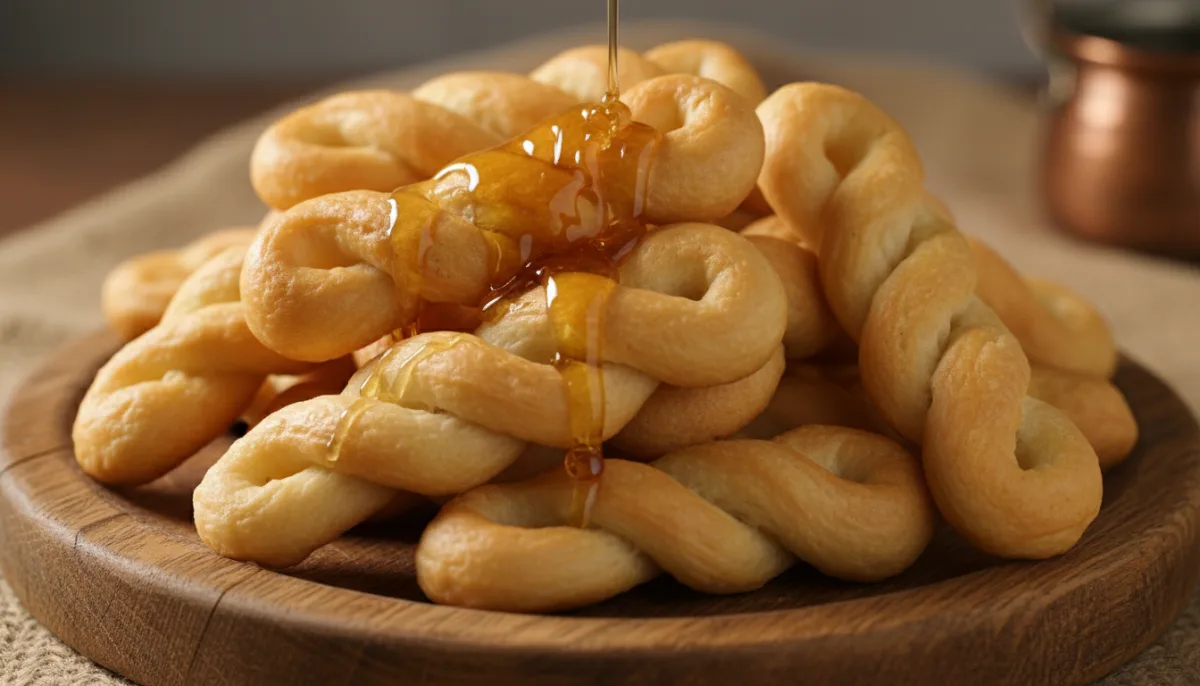
Mongolian Boov are a cherished treat, often gracing tables during festive occasions and family gatherings. This recipe yields a wonderfully light and subtly crisp pastry, ideal for absorbing a luscious honey glaze.

✎
HOW TO MAKE IT

Let's cook.

01

In a large bowl, whisk together the all-purpose flour, baking powder, salt, and granulated sugar.

02

In a separate small bowl, whisk together the milk and egg until well combined. Pour the wet ingredients into the dry ingredients and mix until a soft dough forms. Knead the dough lightly on a floured surface for 2-3 minutes until smooth.

03

Divide the dough into 6 equal portions. Roll each portion into a thin rectangle, about 1/8 inch thick. Cut each rectangle into strips approximately 1 inch wide and 4 inches long. Make a small slit in the center of each strip and pull one end through the slit to create a twisted shape.

04

Heat the vegetable oil in a deep pot or Dutch oven over medium-high heat until it reaches 350°F (175°C).

05

Carefully place 3-4 pastry pieces into the hot oil, ensuring not to overcrowd the pot. Fry for 1-2 minutes per side, or until golden brown and puffed. Use a slotted spoon to remove the fried pastries and place them on a wire rack lined with paper towels to drain excess oil.

06

Once all pastries are fried, arrange them on a serving platter. Drizzle generously with honey before serving warm.

About This Recipe

Mongolian Boov are a cherished treat, often gracing tables during festive occasions and family gatherings. This recipe yields a wonderfully light and subtly crisp pastry, ideal for absorbing a luscious honey glaze.
Mongolian Boov: Golden Fried Pastries with Honey Glaze
Simple ingredients.
Big flavor.
✦
♨

Chef's Tips

Ensure your oil is at the correct temperature for even frying. If the oil is too cool, the pastries will be greasy; if too hot, they will brown too quickly and remain raw inside. A candy thermometer is very helpful here.
↔

Easy Substitutions

You can substitute the milk with buttermilk for a slightly tangier pastry. For the drizzle, maple syrup or a simple sugar glaze can be used instead of honey.
▱

Storage & Reheating

Store leftover Boov in an airtight container at room temperature for up to 2 days. They are best enjoyed fresh.

Serving Suggestions

Serve warm with a cup of hot tea or coffee. They also pair wonderfully with a side of fresh fruit or a dollop of plain yogurt for a balanced treat. For a festive touch, sprinkle with a pinch of cinnamon or finely chopped nuts.

Common Mistakes

1. Overcrowding the pot: This lowers the oil temperature and results in greasy pastries. Fry in small batches. 2. Oil temperature too low: Leads to soggy, oil-soaked Boov. Always check the temperature. 3. Rolling the dough too thick: The pastries won't cook through properly and will be dense. Aim for 1/8 inch thickness. 4. Not draining properly: Excess oil can make the pastries heavy. Use paper towels on a wire rack.

Frequently Asked Questions

Can I make the dough ahead of time?

Yes, you can prepare the dough, wrap it tightly in plastic, and refrigerate for up to 24 hours. Let it come to room temperature for about 30 minutes before rolling.


What kind of honey should I use?

Any liquid honey works well. A lighter, floral honey will offer a delicate sweetness, while a darker, more robust honey will provide a richer flavor.

Can I bake these instead of frying?

While the traditional method is frying, you could try baking them at 375°F (190°C) for 10-15 minutes until golden, but the texture will be different (more like a biscuit than a fried pastry).
MORE TO KNOW
The traditional twisted shape of Boov is not just for aesthetics; it helps the pastry cook evenly and creates more surface area for the honey to cling to. Don't be afraid to experiment with different twists or knots, but ensure they are not too thick in any one spot to allow for thorough cooking. If you don't have a thermometer, test the oil by dropping a small piece of dough in; it should sizzle immediately and float to the surface within a few seconds.
WHAT PEOPLE THINK

Reviews

☆

No reviews yet

Be the first person to review this recipe.

SHARE YOUR THOUGHTS

Made this recipe?

Tell us how it turned out.

Your review will be checked before appearing publicly.