Home › Recipes › Dessert ›Maldivian ›Maldivian Saagu Bondibai with Coconut Milk and Rosewater
DESSERT

Maldivian Saagu Bondibai with Coconut Milk and Rosewater

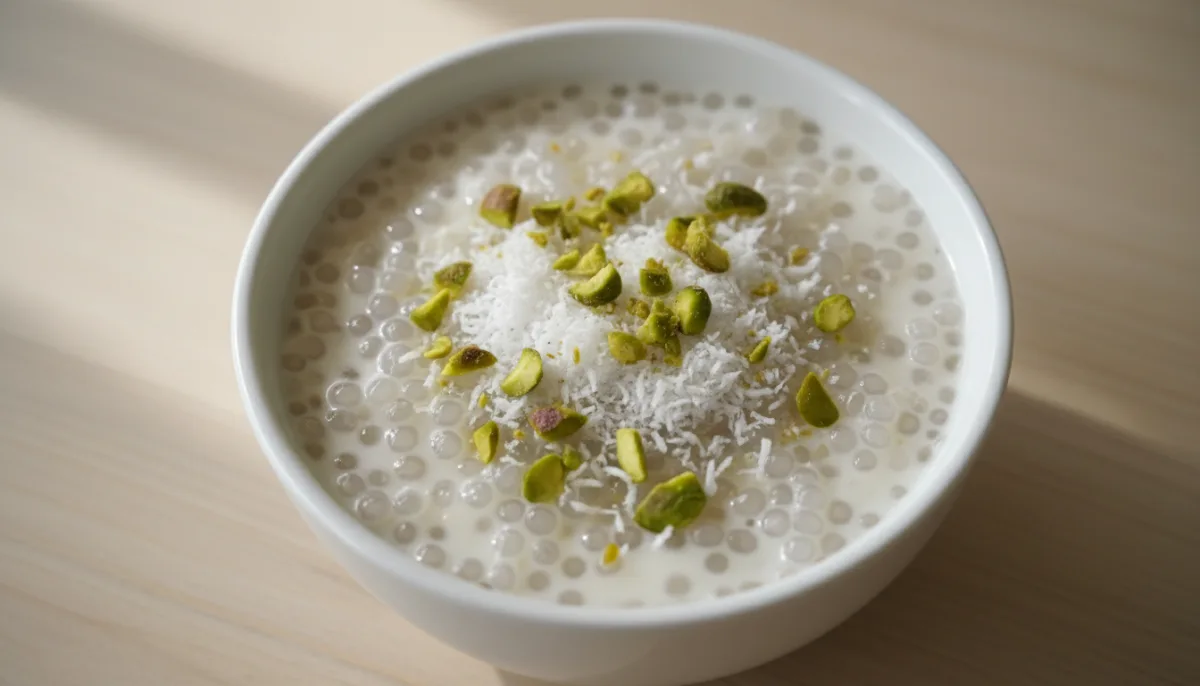
This creamy Maldivian sago pudding, known as Saagu Bondibai, is a delightful dessert featuring the subtle floral notes of rosewater and the rich sweetness of coconut milk. It's a comforting and exotic treat perfect for any occasion.

✎
HOW TO MAKE IT

Let's cook.

01

Rinse the sago pearls under cold water in a fine-mesh sieve until the water runs clear. This removes excess starch and prevents stickiness.

02

In a medium saucepan, combine the rinsed sago pearls and 2 cups of the coconut milk. Bring to a gentle simmer over medium heat, stirring occasionally to prevent sticking.

03

Once simmering, reduce the heat to low and cook for 15-20 minutes, stirring frequently, until the sago pearls become translucent and tender. If the mixture becomes too thick, add a splash more coconut milk.

04

Stir in the granulated sugar and cardamom powder. Continue to cook for another 5 minutes, or until the sugar has fully dissolved and the pudding has thickened to your desired consistency.

05

Remove the saucepan from the heat. Stir in the remaining 1 cup of coconut milk and the rosewater. Mix well to combine.

06

Pour the Saagu Bondibai into individual serving bowls or a large communal dish. Allow it to cool slightly at room temperature, then chill in the refrigerator for at least 2 hours, or until thoroughly cold and set.

07

Before serving, garnish generously with shredded coconut and chopped pistachios.

About This Recipe

This creamy Maldivian sago pudding, known as Saagu Bondibai, is a delightful dessert featuring the subtle floral notes of rosewater and the rich sweetness of coconut milk. It's a comforting and exotic treat perfect for any occasion.
Maldivian Saagu Bondibai with Coconut Milk and Rosewater
Simple ingredients.
Big flavor.
✦
♨

Chef's Tips

For an extra creamy texture, soak the sago pearls in water for 30 minutes before rinsing and cooking. This can also reduce cooking time slightly. Adjust the sweetness to your preference; some prefer a less sweet pudding.
↔

Easy Substitutions

If rosewater is unavailable, vanilla extract can be used for a different flavor profile. Almond extract also works well. For a nut-free garnish, use toasted coconut flakes or fresh berries instead of pistachios.
▱

Storage & Reheating

Store leftover Maldivian Saagu Bondibai in an airtight container in the refrigerator for up to 3 days. It is best served chilled.

Serving Suggestions

Serve this chilled sago pudding as a refreshing dessert after a spicy meal. It can also be a delightful afternoon snack or a light breakfast. For a richer experience, serve with a dollop of coconut cream or a sprinkle of toasted cashews.

Common Mistakes

1. Not rinsing the sago pearls: This leads to a sticky, gummy pudding. Always rinse until the water is clear. 2. Not stirring frequently: Sago pearls can easily stick to the bottom of the pan and burn. Stir constantly, especially at the beginning. 3. Overcooking: Sago pearls should be translucent and tender, not mushy. Keep an eye on them and remove from heat once they reach the desired texture. 4. Adding rosewater too early: Rosewater's delicate fragrance can dissipate with prolonged heat, so add it at the end.

Frequently Asked Questions

Can I use tapioca pearls instead of sago pearls?

While similar, sago and tapioca pearls have slightly different textures. Small tapioca pearls can be used as a substitute, but the cooking time might vary slightly.


Is this dessert vegan?

Yes, this recipe is naturally vegan as it uses coconut milk and plant-based ingredients.

Can I make this ahead of time?

Absolutely! Saagu Bondibai is best served chilled, so making it a few hours or even a day in advance is recommended.
MORE TO KNOW
Sago pearls are derived from the pith of various tropical palm stems and are naturally gluten-free. They are distinct from tapioca pearls, which come from cassava root. The key to a smooth, non-clumpy sago pudding is frequent stirring during the cooking process, especially in the initial stages, to prevent the pearls from sticking together at the bottom of the pan. The final consistency should be thick and creamy, with translucent pearls suspended throughout.
WHAT PEOPLE THINK

Reviews

☆

No reviews yet

Be the first person to review this recipe.

SHARE YOUR THOUGHTS

Made this recipe?

Tell us how it turned out.

Your review will be checked before appearing publicly.