Home › Recipes › Dessert ›Kenyan ›Kenyan Halwa: Aromatic Semolina Pudding with Cardamom & Saffron
DESSERT

Kenyan Halwa: Aromatic Semolina Pudding with Cardamom & Saffron

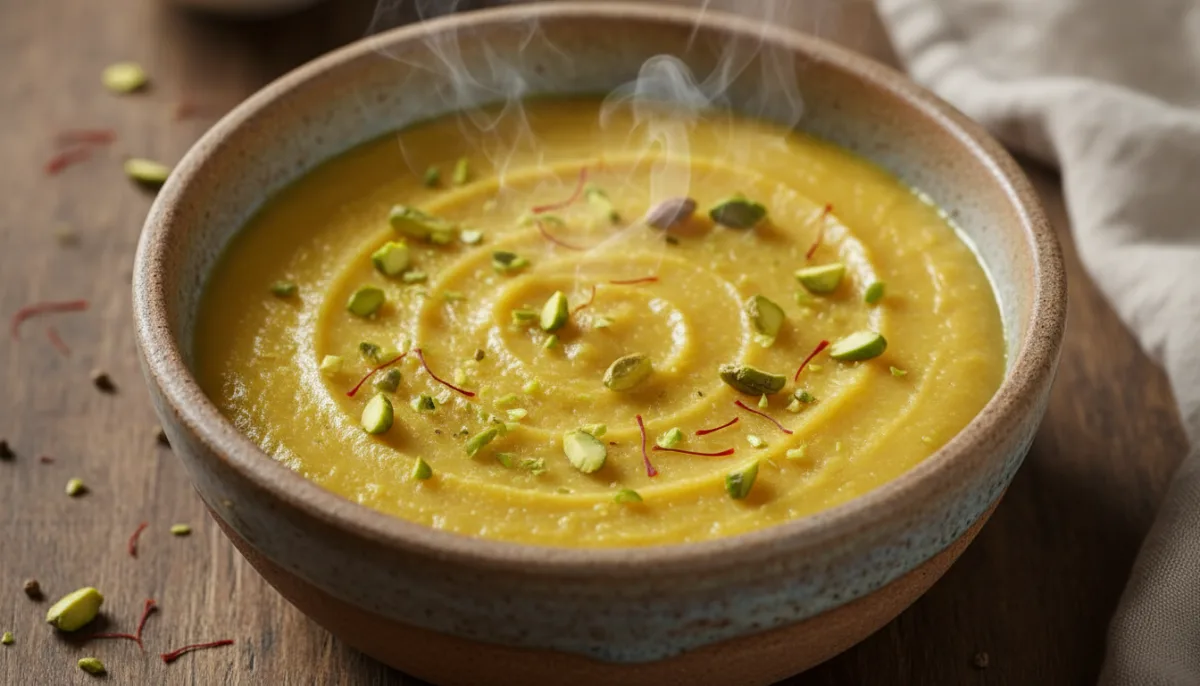
Indulge in the rich, comforting flavors of Kenyan Halwa, a traditional semolina pudding. This delightful dessert is beautifully scented with fragrant cardamom and vibrant saffron, making it a perfect sweet ending to any meal or a special occasion treat.

✎
HOW TO MAKE IT

Let's cook.

01

In a large, heavy-bottomed saucepan, melt the unsalted butter over medium heat. Add the fine semolina and stir continuously for 8-10 minutes until the semolina turns a light golden brown and smells fragrant. Be careful not to burn it.

02

While the semolina is toasting, gently warm the whole milk in a separate small saucepan over low heat. Add the granulated sugar, ground cardamom, and saffron threads to the warm milk, stirring until the sugar dissolves completely.

03

Slowly pour the warm milk mixture into the toasted semolina, stirring constantly to prevent lumps. The mixture will thicken quickly.

04

Reduce the heat to low and continue to cook, stirring frequently, for 10-12 minutes, until the halwa pulls away from the sides of the pan and has a thick, pudding-like consistency.

05

Remove the saucepan from the heat. Cover it and let it rest for 5 minutes to allow the semolina to fully absorb the liquids and become tender.

06

Spoon the warm halwa into individual serving dishes or a larger platter. Garnish generously with chopped pistachios before serving.

About This Recipe

Indulge in the rich, comforting flavors of Kenyan Halwa, a traditional semolina pudding. This delightful dessert is beautifully scented with fragrant cardamom and vibrant saffron, making it a perfect sweet ending to any meal or a special occasion treat.
Kenyan Halwa: Aromatic Semolina Pudding with Cardamom & Saffron
Simple ingredients.
Big flavor.
✦
♨

Chef's Tips

For an extra rich flavor, you can add a tablespoon of ghee along with the butter. Adjust the sugar to your preference; some like it sweeter, others less so. Ensure the semolina is toasted evenly for the best flavor and texture.
↔

Easy Substitutions

Almonds or cashews can be used instead of pistachios for garnish. If saffron is unavailable, a pinch of turmeric can provide color, but the flavor will differ. Any milk can be used, but whole milk provides the creamiest texture.
▱

Storage & Reheating

Store leftover halwa in an airtight container in the refrigerator for up to 3 days. Reheat gently in a microwave or on the stovetop with a splash of milk to restore its creamy texture.

Serving Suggestions

Serve Kenyan Halwa warm as a comforting dessert. It pairs wonderfully with a cup of spiced chai or strong Kenyan coffee. For a refreshing contrast, serve alongside fresh fruit like mango or berries. A dollop of plain yogurt or a drizzle of honey can also complement its sweetness.

Common Mistakes

1. Not toasting the semolina enough: This results in a raw, floury taste. Toast until fragrant and lightly golden. 2. Burning the semolina: Over-toasting will make the halwa bitter. Keep the heat medium and stir constantly. 3. Adding milk too quickly: This can cause lumps. Pour slowly while stirring vigorously. 4. Not cooking long enough: The halwa will be too runny. Cook until it pulls away from the pan. 5. Over-sweetening: Start with the recommended sugar and adjust to taste.

Frequently Asked Questions

Can I make this halwa vegan?

Yes, you can substitute unsalted butter with a plant-based butter alternative or coconut oil, and whole milk with a rich plant-based milk like full-fat coconut milk or oat milk.


What kind of semolina should I use?

Fine semolina (also known as semolina flour or cream of wheat) is best for this recipe as it creates a smoother pudding. Coarse semolina will result in a grainier texture.

Can I add other spices?

Absolutely! While cardamom and saffron are traditional, you can experiment with a pinch of nutmeg or cinnamon for additional warmth.

How do I know when the halwa is cooked?

The halwa is cooked when it thickens significantly, pulls away from the sides of the pan, and has a glossy appearance. It should resemble a thick pudding.
MORE TO KNOW
The key to a perfect halwa is the careful toasting of the semolina. This step develops a nutty flavor that is crucial to the dish. Stirring constantly prevents burning and ensures even browning. When adding the milk, do so slowly and stir vigorously to avoid lumps, which can make the halwa grainy. The resting period after cooking allows the semolina to fully hydrate, resulting in a smooth, tender pudding.
WHAT PEOPLE THINK

Reviews

☆

No reviews yet

Be the first person to review this recipe.

SHARE YOUR THOUGHTS

Made this recipe?

Tell us how it turned out.

Your review will be checked before appearing publicly.