Home › Recipes › Dessert ›Iraqi ›Iraqi Halva with Tahini and Pistachios
DESSERT

Iraqi Halva with Tahini and Pistachios

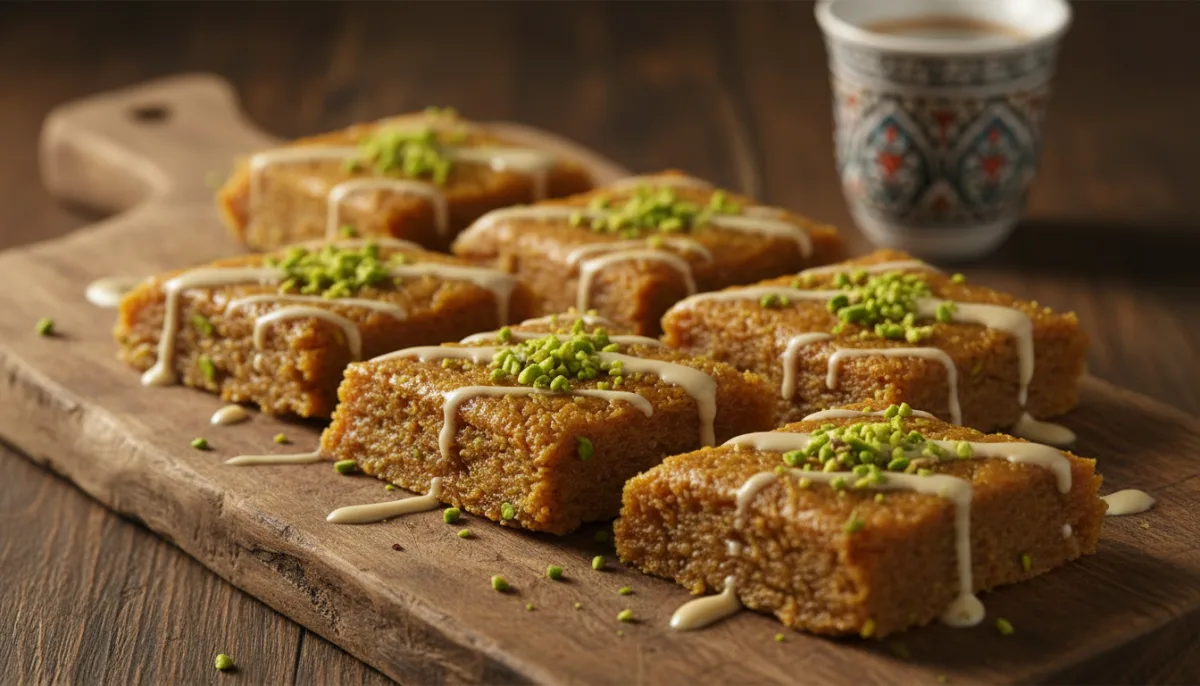
This traditional Iraqi halva offers a delightful balance of sweet and nutty flavors, enhanced by the rich aroma of tahini and the crunch of pistachios. It's a simple yet satisfying dessert, perfect for sharing.

✎
HOW TO MAKE IT

Let's cook.

01

In a medium saucepan, melt 1/2 cup unsalted butter over medium heat. Add 1 cup all-purpose flour and stir continuously for 10-12 minutes, or until the flour turns a golden brown color and smells nutty. Be careful not to burn it.

02

While the flour is toasting, combine 1 cup granulated sugar and 1/2 cup water in a separate small saucepan. Bring to a boil over medium-high heat, stirring until the sugar dissolves completely. Remove from heat.

03

Remove the toasted flour mixture from the heat. Gradually pour the hot sugar syrup into the flour mixture, stirring constantly to prevent lumps. The mixture will thicken quickly.

04

Stir in 1/2 cup tahini and 1/2 teaspoon cardamom powder until well combined and smooth. The halva will be very thick.

05

Press the warm halva into a shallow dish or mold, about 1-inch thick. Sprinkle 1/2 cup chopped pistachios evenly over the top, gently pressing them into the halva.

06

Allow the halva to cool completely at room temperature for at least 1 hour, or until firm. Once cooled, cut into squares or diamond shapes before serving.

About This Recipe

This traditional Iraqi halva offers a delightful balance of sweet and nutty flavors, enhanced by the rich aroma of tahini and the crunch of pistachios. It's a simple yet satisfying dessert, perfect for sharing.
Iraqi Halva with Tahini and Pistachios
Simple ingredients.
Big flavor.
✦
♨

Chef's Tips

For an extra aromatic touch, lightly toast the pistachios in a dry pan for a few minutes before chopping and adding to the halva. This enhances their flavor and crunch.
↔

Easy Substitutions

Almonds or walnuts can be used instead of pistachios for a different nutty flavor. If you don't have cardamom, a pinch of saffron threads steeped in a tablespoon of hot water can offer a unique aroma.
▱

Storage & Reheating

Store Iraqi Halva in an airtight container at room temperature for up to 1 week. It can also be refrigerated for up to 2 weeks, but allow it to come to room temperature before serving for best texture.

Serving Suggestions

Serve Iraqi Halva with a cup of hot black tea or Arabic coffee. It can also be enjoyed as a sweet snack on its own, or crumbled over plain yogurt for a delightful breakfast or light dessert. For a more elaborate presentation, arrange pieces on a platter with fresh fruit like grapes or figs.

Common Mistakes

1. Not toasting the flour enough: This results in a raw, unpleasant flour taste. Toast until golden brown and fragrant. 2. Burning the flour: Over-toasting will make the halva bitter. Keep the heat medium and stir constantly. 3. Not stirring the syrup in quickly enough: This can lead to lumps in the halva. Pour gradually while stirring vigorously. 4. Cutting the halva before it's fully cooled: This will result in a messy, crumbly texture. Allow it to firm up completely. 5. Using salted pistachios: This can make the halva too salty. Opt for unsalted pistachios.

Frequently Asked Questions

Can I make this halva vegan?

Yes, you can substitute the unsalted butter with a plant-based butter alternative or coconut oil.


What is the texture of this halva?

Iraqi halva has a dense, slightly crumbly, yet melt-in-your-mouth texture, distinct from the more crumbly, flaky Turkish or Greek halva.

Can I add other spices?

While cardamom is traditional, you can experiment with a pinch of cinnamon or a drop of rosewater for a different flavor profile.

How do I know when the flour is perfectly toasted?

The flour should turn a rich golden-brown color, similar to light caramel, and emit a distinct nutty, toasted aroma. It should not smell burnt or raw.

Can I use a different type of nut?

Absolutely! While pistachios are traditional, blanched almonds or walnuts would also be delicious.
MORE TO KNOW
Achieving the perfect golden brown for the flour is crucial for the halva's flavor. It should smell fragrant and nutty, not burnt. If the flour is too light, the halva will taste raw. If it's too dark, it will be bitter. Stirring constantly prevents scorching and ensures even toasting. The addition of tahini not only provides a rich, earthy flavor but also contributes to the halva's characteristic dense yet crumbly texture.
WHAT PEOPLE THINK

Reviews

☆

No reviews yet

Be the first person to review this recipe.

SHARE YOUR THOUGHTS

Made this recipe?

Tell us how it turned out.

Your review will be checked before appearing publicly.