Home › Recipes › Lunch ›Cameroonian ›Cameroonian Achu Soup with Yellow Ekwang
LUNCH

Cameroonian Achu Soup with Yellow Ekwang

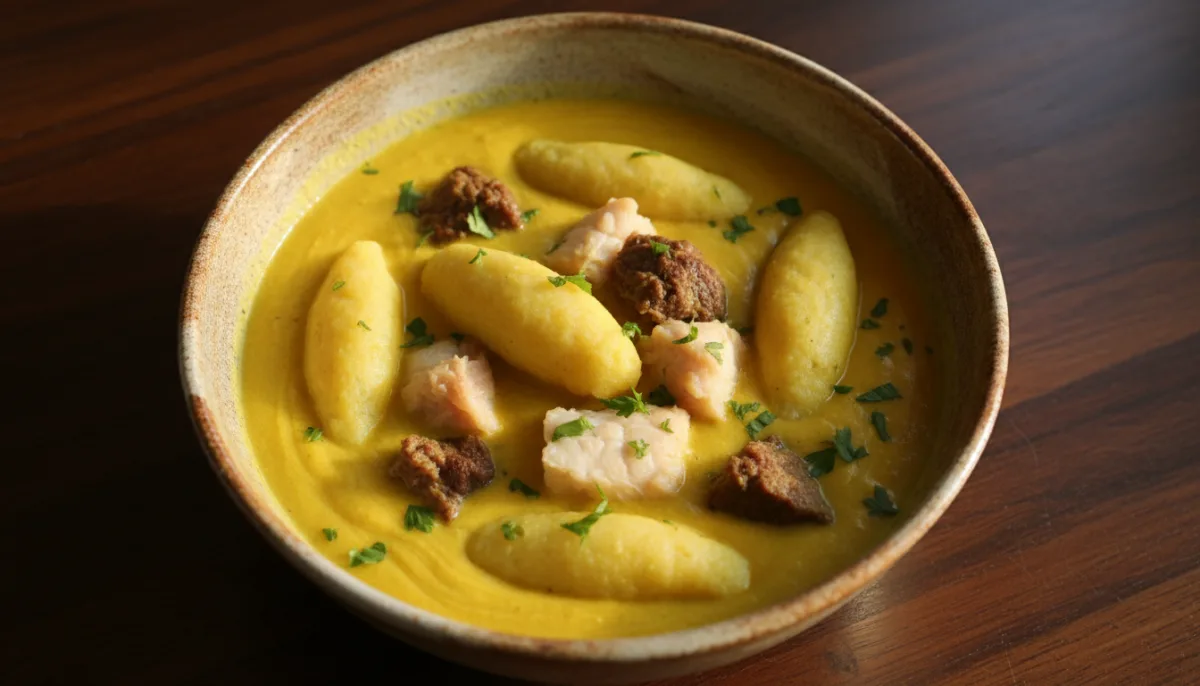
Experience the rich, earthy flavors of Cameroon with this traditional Achu Soup, a vibrant yellow taro-based soup, perfectly paired with savory Yellow Ekwang (grated cocoyam dumplings). This hearty and comforting meal is a staple in Cameroonian cuisine, offering a unique blend of spices and textures.

✎
HOW TO MAKE IT

Let's cook.

01

Boil the taro chunks in a large pot with enough water to cover them, on medium-high heat for 30-40 minutes, or until very tender. Drain and mash thoroughly until smooth, forming the achu paste. Set aside.

02

In a separate pot, boil the beef pieces in 2 cups of water with 1/2 teaspoon of salt for 30 minutes, or until tender. Reserve the broth.

03

To prepare the Yellow Ekwang, mix the grated cocoyam with 1/4 cup palm oil and 1/4 teaspoon salt. Form small, elongated dumplings. Set aside.

04

In a large pot, heat 1/2 cup palm oil over medium heat. Add the chopped onion and sauté for 5 minutes until softened. Add the achu spice blend and crayfish powder, stirring for 2 minutes until fragrant.

05

Pour in the reserved beef broth and 2 additional cups of water. Bring to a simmer. Add the cooked beef and flaked smoked fish. Gently drop the Yellow Ekwang dumplings into the simmering soup.

06

Cook on medium-low heat for 20-25 minutes, or until the Ekwang dumplings are cooked through and the soup has thickened slightly. Stir occasionally to prevent sticking.

07

Gradually add the mashed achu paste to the soup, stirring continuously until fully incorporated and the soup reaches a smooth, thick consistency. Season with salt to taste. Serve hot.

About This Recipe

Experience the rich, earthy flavors of Cameroon with this traditional Achu Soup, a vibrant yellow taro-based soup, perfectly paired with savory Yellow Ekwang (grated cocoyam dumplings). This hearty and comforting meal is a staple in Cameroonian cuisine, offering a unique blend of spices and textures.
Cameroonian Achu Soup with Yellow Ekwang
Simple ingredients.
Big flavor.
✦
♨

Chef's Tips

For a smoother achu paste, use a food processor or a traditional mortar and pestle. Ensure the taro is very soft before mashing. The Ekwang dumplings should be added gently to prevent them from breaking apart.
↔

Easy Substitutions

If taro is unavailable, you can use other starchy root vegetables like yam or cassava, though the texture and flavor will differ. For the Ekwang, sweet potatoes can be used, but cocoyam is traditional. Any firm white fish can substitute smoked fish.
▱

Storage & Reheating

Store leftover Achu Soup and Ekwang separately in airtight containers in the refrigerator for up to 3 days. Reheat gently on the stovetop over low heat, adding a splash of water or broth if needed to adjust consistency.

Serving Suggestions

Serve this Cameroonian Achu Soup with Yellow Ekwang as a complete meal. It can be accompanied by a simple side salad of fresh tomatoes and cucumbers. A sprinkle of fresh parsley or cilantro can add a touch of freshness. For an extra kick, offer a side of spicy pepper sauce.

Common Mistakes

Over-boiling the taro can make it watery and difficult to mash smoothly. Not mashing the taro thoroughly will result in a lumpy soup. Adding the achu paste too quickly to the soup can cause lumps; add it gradually while stirring. Overcooking the Ekwang can make them mushy. Not seasoning the soup adequately can lead to a bland taste.

Frequently Asked Questions

What is achu spice blend?

Achu spice blend is a traditional Cameroonian mix, often containing ingredients like njansang (African nutmeg), country onions (Afrostyrax lepidophyllus), and garlic, giving the soup its distinctive aroma and flavor.


Can I make this vegetarian?

Yes, you can omit the beef and smoked fish, and use vegetable broth instead of beef broth. You might want to add more vegetables like spinach or callaloo for substance.

How do I know when the Ekwang is cooked?

The Ekwang dumplings will become slightly translucent and firm to the touch when cooked through. You can also taste one to check for doneness.

Is this dish spicy?

The recipe as written is not inherently spicy, but you can add fresh or dried chili peppers to the soup or serve with a side of hot sauce to adjust the spice level to your preference.

What is the best way to mash the taro?

A traditional wooden mortar and pestle (like a fufu pounder) is ideal for the smoothest achu. Alternatively, a sturdy potato masher or a food processor can be used, adding a little liquid if needed.
MORE TO KNOW
Achu soup is traditionally served with a specific texture: thick, smooth, and slightly elastic. Achieving this requires thorough mashing of the taro. If your achu paste is too stiff, you can add a little warm water or broth while mashing to reach the desired consistency. The Yellow Ekwang adds a delightful textural contrast and a subtle sweetness that complements the savory soup. The palm oil not only imparts its characteristic color but also a unique flavor profile essential to this dish.
WHAT PEOPLE THINK

Reviews

☆

No reviews yet

Be the first person to review this recipe.

SHARE YOUR THOUGHTS

Made this recipe?

Tell us how it turned out.

Your review will be checked before appearing publicly.