Home › Recipes › Breakfast ›Bolivian ›Bolivian Llajwa with Fried Eggs and Arepas
BREAKFAST

Bolivian Llajwa with Fried Eggs and Arepas

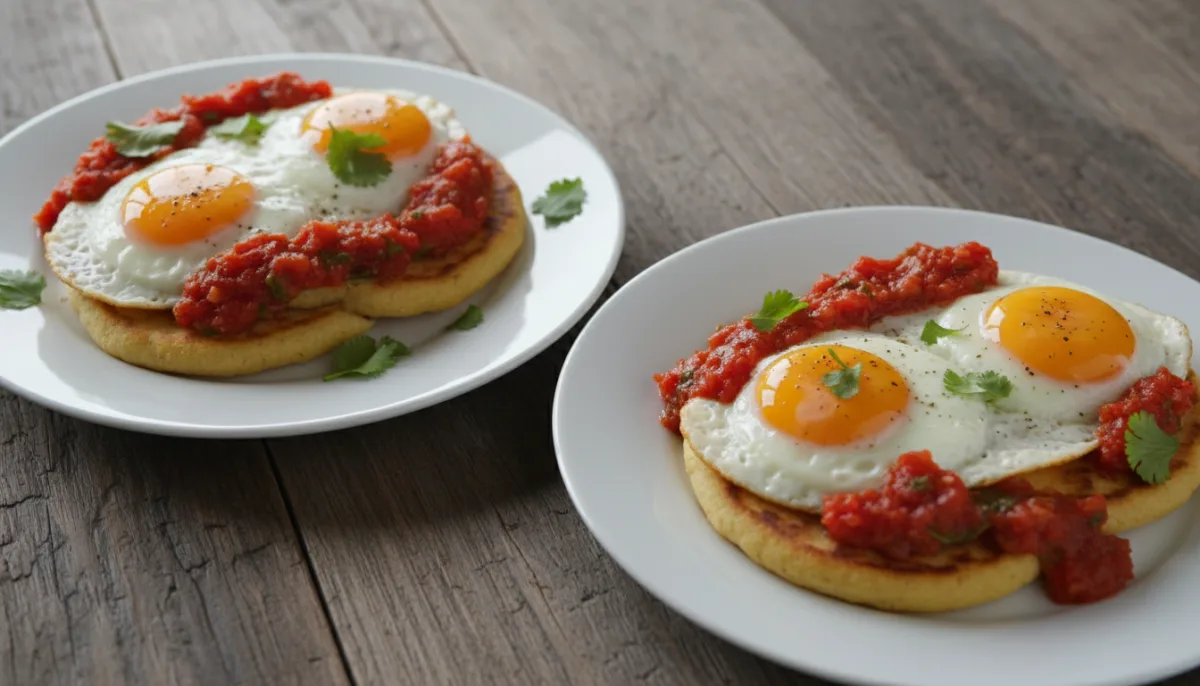
This vibrant Bolivian breakfast combines a fresh, spicy salsa (llajwa) with perfectly fried eggs and crispy, golden arepas. It's a flavorful and satisfying way to start your day, offering a taste of Andean cuisine.

✎
HOW TO MAKE IT

Let's cook.

01

First, prepare the llajwa: Combine the chopped tomatoes, red onion, garlic, locoto pepper, cilantro, and 1 tablespoon of water in a blender or food processor. Pulse until a chunky salsa forms. Do not over-blend; it should not be completely smooth. Season with salt to taste and set aside.

02

Next, prepare the arepas: In a medium bowl, combine the masarepa, 1 1/4 cups warm water, and 1/2 teaspoon salt. Mix well until a soft dough forms. Let it rest for 5 minutes to allow the cornmeal to hydrate.

03

Divide the dough into 4 equal portions. Roll each portion into a ball, then flatten into a disc about 1/2 inch thick and 3-4 inches in diameter.

04

Heat 1 tablespoon of vegetable oil in a large non-stick skillet over medium heat. Cook the arepas for 5-7 minutes per side, or until golden brown and cooked through. They should sound hollow when tapped.

05

While the arepas cook, fry the eggs: In a separate skillet, heat the remaining 1 tablespoon of vegetable oil over medium heat. Crack the eggs into the skillet and fry for 2-3 minutes, or until the whites are set and the yolks are still runny (or to your preferred doneness).

06

Serve immediately: Place 2 arepas on each plate, top with 2 fried eggs, and generously spoon the fresh llajwa over everything.

About This Recipe

This vibrant Bolivian breakfast combines a fresh, spicy salsa (llajwa) with perfectly fried eggs and crispy, golden arepas. It's a flavorful and satisfying way to start your day, offering a taste of Andean cuisine.
Bolivian Llajwa with Fried Eggs and Arepas
Simple ingredients.
Big flavor.
✦
♨

Chef's Tips

For a milder llajwa, remove the seeds and veins from the locoto pepper. If you don't have masarepa, you can use fine yellow cornmeal, but the texture of the arepas might be slightly different. Ensure your skillet is hot enough for the arepas to brown nicely without burning.
↔

Easy Substitutions

Serrano peppers can be used instead of locoto peppers. For a vegetarian option, omit the eggs and serve with avocado slices. You can also add a pinch of cumin to the llajwa for an extra layer of flavor.
▱

Storage & Reheating

Llajwa can be stored in an airtight container in the refrigerator for up to 3 days. Arepas are best enjoyed fresh but can be stored at room temperature for a day and reheated in a toaster or skillet. Fried eggs should be consumed immediately.

Serving Suggestions

Serve with a side of sliced avocado, a sprinkle of crumbled queso fresco, or a small bowl of black beans. A cup of strong coffee or a glass of fresh fruit juice would complete this hearty breakfast.

Common Mistakes

Over-blending the llajwa, resulting in a watery sauce instead of a chunky salsa. Not letting the arepa dough rest, which can lead to crumbly arepas. Frying arepas on too low heat, making them dry and hard instead of crispy outside and soft inside. Overcooking the eggs, losing the desirable runny yolk.

Frequently Asked Questions

Can I make the llajwa ahead of time?

Yes, you can prepare the llajwa up to 3 days in advance and store it in the refrigerator.

What is masarepa?

Masarepa is a pre-cooked cornmeal flour commonly used in Latin American cuisine, especially for making arepas and empanadas.

Can I bake the arepas instead of frying?

While traditionally fried, you can bake arepas at 375°F/190°C for 15-20 minutes, flipping halfway, until golden and cooked through. They might be less crispy.
MORE TO KNOW
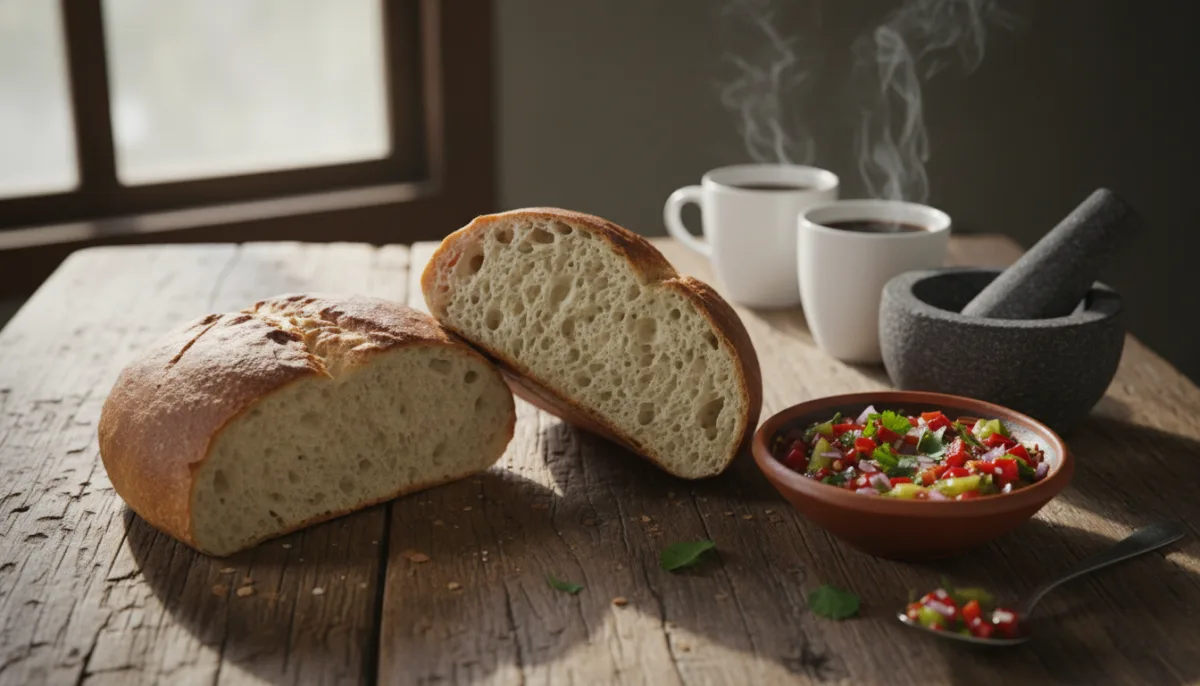
Llajwa is a staple in Bolivian cuisine, often prepared using a traditional stone mortar and pestle called a 'batán' to achieve a specific texture. While a blender is a convenient substitute, pulsing rather than pureeing helps maintain that authentic chunky consistency. The key to good arepas is getting the dough consistency right: it should be firm enough to hold its shape but soft enough to not crack. If the dough feels too dry, add a tiny bit more water; if too wet, add a little more masarepa.
WHAT PEOPLE THINK

Reviews

☆

No reviews yet

Be the first person to review this recipe.

SHARE YOUR THOUGHTS

Made this recipe?

Tell us how it turned out.

Your review will be checked before appearing publicly.