Home › Recipes › Dinner ›Basque ›Basque-Style Cod with Garlic-Olive Oil Emulsion (Bacalao al Pil Pil)
DINNER

Basque-Style Cod with Garlic-Olive Oil Emulsion (Bacalao al Pil Pil)

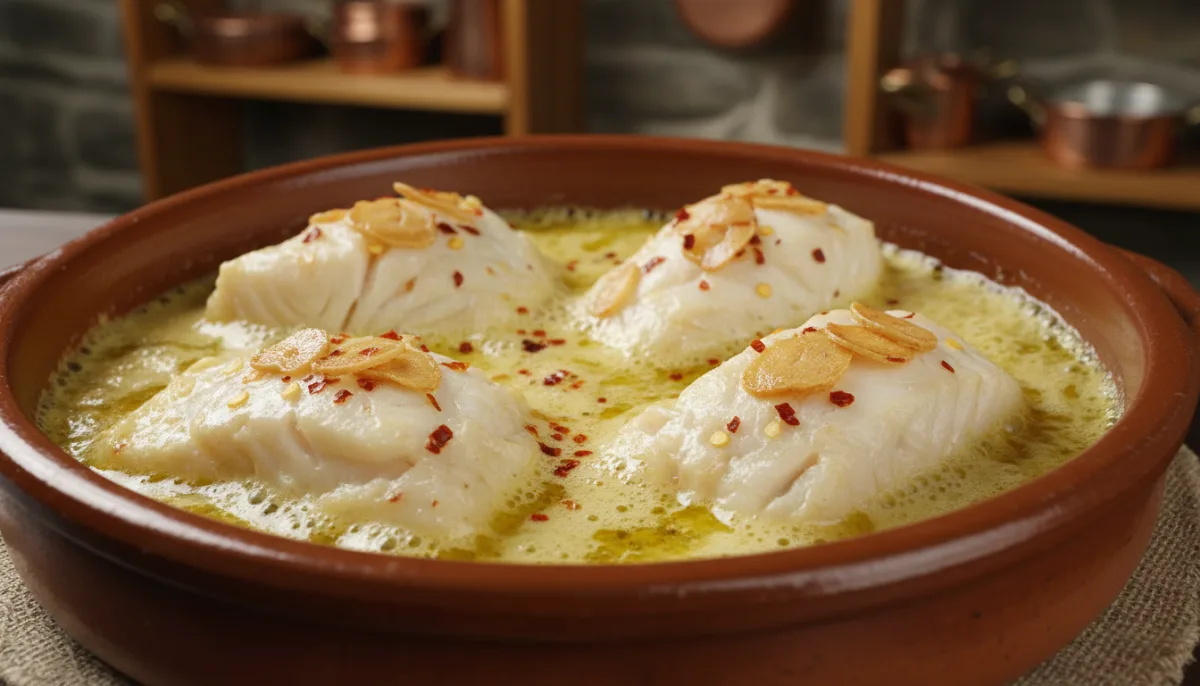
Discover the culinary artistry of the Basque Country with this iconic Bacalao al Pil Pil. Just a few humble ingredients—salt cod, garlic, and olive oil—transform into a luxurious, silky emulsion, showcasing the region's dedication to flavor and tradition. This dish is a testament to simple elegance.

✎
HOW TO MAKE IT

Let's cook.

01

Ensure the salt cod is thoroughly desalted. Pat the cod fillets completely dry with paper towels. Cut the cod into 4 equal portions.

02

In a deep, heavy-bottomed skillet or earthenware cazuela, add 2 cups of extra virgin olive oil. Heat the oil over low heat until warm, but not smoking. Add the thinly sliced garlic and the dried guindilla pepper (if using). Gently fry the garlic until it is golden brown and fragrant, about 5-7 minutes. Remove the garlic and pepper with a slotted spoon and set aside.

03

Increase the heat to medium-low. Place the cod fillets skin-side up in the warm olive oil. Cook gently for about 5-8 minutes, allowing the cod to release its gelatin into the oil. The oil should barely simmer, not fry the cod.

04

Remove the cod fillets from the oil and set them aside. Let the oil cool slightly for 2-3 minutes. This cooling step is crucial for emulsion.

05

Return the skillet with the oil to very low heat. Using a fine-mesh sieve or a small whisk, begin to gently stir the oil in a circular motion. As you stir, gradually add a few tablespoons of the reserved cooking liquid (from the cod, if any, or a tiny splash of water if needed) to help start the emulsion. Continue stirring, incorporating air, until the oil thickens into a creamy, pale yellow sauce. This process can take 10-15 minutes.

06

Once the pil pil sauce has emulsified, return the cod fillets to the skillet, skin-side down. Gently spoon the sauce over the cod. Add the reserved fried garlic and guindilla pepper back to the pan. Warm through for 2-3 minutes over very low heat, ensuring the sauce doesn't break. Taste and add salt if necessary.

07

Serve immediately, ensuring each portion of cod is generously coated with the rich pil pil sauce.

About This Recipe

Discover the culinary artistry of the Basque Country with this iconic Bacalao al Pil Pil. Just a few humble ingredients—salt cod, garlic, and olive oil—transform into a luxurious, silky emulsion, showcasing the region's dedication to flavor and tradition. This dish is a testament to simple elegance.
Basque-Style Cod with Garlic-Olive Oil Emulsion (Bacalao al Pil Pil)
Simple ingredients.
Big flavor.
✦
♨

Chef's Tips

The key to a successful pil pil is patience and consistent, gentle stirring to create the emulsion. Use a good quality extra virgin olive oil, as it is a star ingredient. Desalting the cod properly is paramount; if unsure, taste a small piece after desalting to check saltiness.
↔

Easy Substitutions

If salt cod is unavailable, fresh cod can be used, but the flavor profile will be different, and the emulsion will be harder to achieve due to less gelatin. You can add a tablespoon of fish stock to the oil to aid emulsion if using fresh cod. For a milder flavor, omit the guindilla pepper.
▱

Storage & Reheating

Bacalao al Pil Pil is best enjoyed fresh. Leftovers can be stored in an airtight container in the refrigerator for up to 1 day, but the emulsion may separate. Reheat gently over very low heat, stirring constantly to try and re-emulsify the sauce.

Serving Suggestions

Serve this classic Basque dish with crusty bread to soak up every last drop of the delicious pil pil sauce. A simple green salad with a light vinaigrette makes a refreshing accompaniment. Pair it with a crisp, dry white wine like a Txakoli or a Spanish Albariño.

Common Mistakes

1. Not desalting the cod properly: This will result in an overly salty dish. Ensure at least 24-48 hours of soaking with frequent water changes. 2. Overheating the oil: Too high heat will fry the cod and prevent the gelatin from releasing, making emulsion difficult. Keep the heat very low. 3. Not cooling the oil before emulsifying: The oil needs to be warm, not hot, for the emulsion to form correctly. 4. Not stirring consistently: The circular motion and constant stirring are vital for creating the pil pil sauce. 5. Using poor quality olive oil: Since olive oil is a main component, a low-quality oil will negatively impact the flavor.

Frequently Asked Questions

Can I use fresh cod instead of salt cod?

While you can use fresh cod, the traditional flavor and the gelatin needed for the emulsion will be less pronounced. You might need to add a tablespoon of fish stock to help with the emulsion.


My sauce isn't emulsifying, what should I do?

If the sauce isn't thickening, remove the cod, let the oil cool slightly, and try whisking more vigorously. You can also try adding a tiny splash of cold water or a fresh tablespoon of olive oil to help it come together.

How do I properly desalt salt cod?

Cut the cod into serving-sized pieces and place them in a large bowl of cold water, skin-side up. Change the water every 6-8 hours for at least 24-48 hours, depending on the thickness of the cod. Taste a small piece to ensure it's not too salty before cooking.
MORE TO KNOW
The 'pil pil' in the name refers to the sound the cod makes as it gently cooks in the oil, and also to the characteristic movement required to emulsify the sauce. The gelatin released from the cod's skin is essential for creating the creamy, thick sauce. If your emulsion breaks, don't despair! Remove the cod, let the oil cool slightly, and try whisking vigorously again, perhaps adding a tiny bit of cold water or a fresh tablespoon of olive oil to help it come together. The quality of your olive oil and the proper desalting of the cod are the two most critical factors for success.
WHAT PEOPLE THINK

Reviews

☆

No reviews yet

Be the first person to review this recipe.

SHARE YOUR THOUGHTS

Made this recipe?

Tell us how it turned out.

Your review will be checked before appearing publicly.