Home › Recipes › Breakfast ›Afghan ›Afghan Halwa-e-Aurd (Flour Halwa) with Cardamom and Pistachios
BREAKFAST

Afghan Halwa-e-Aurd (Flour Halwa) with Cardamom and Pistachios

This traditional Afghan Halwa-e-Aurd is a comforting and aromatic breakfast or dessert, featuring toasted flour sweetened with a fragrant sugar syrup and enriched with cardamom and pistachios. It's a simple yet deeply flavorful dish that offers a taste of Afghan hospitality.

✎
HOW TO MAKE IT

Let's cook.

01

In a small saucepan, combine the granulated sugar and water. Bring to a simmer over medium heat, stirring until the sugar dissolves completely. Remove from heat and set aside.

02

In a large, heavy-bottomed skillet, melt the ghee over medium heat. Add the all-purpose flour and stir continuously. Cook for 10-15 minutes, or until the flour turns a rich golden-brown color and smells nutty. Be careful not to burn it.

03

Slowly pour the warm sugar syrup into the toasted flour mixture, stirring constantly to prevent lumps. The mixture will thicken quickly.

04

Add the ground cardamom and continue to stir until the halwa pulls away from the sides of the skillet and forms a soft mass, about 2-3 minutes.

05

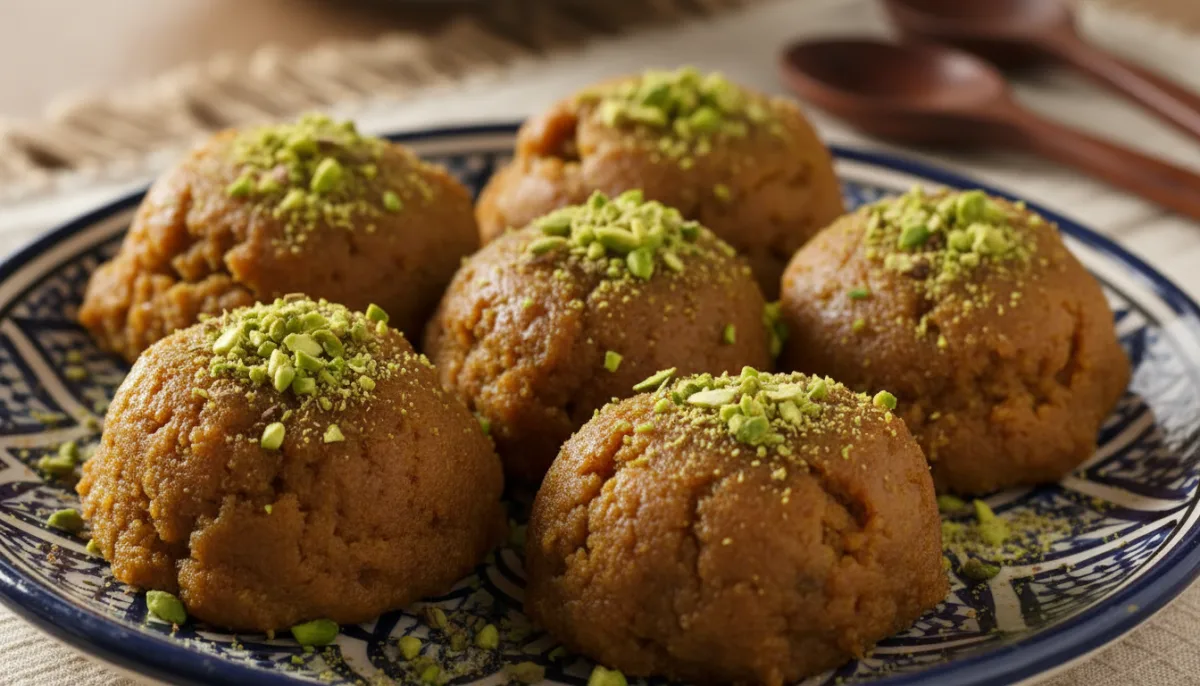
Remove the halwa from the heat. Press it into a shallow dish or mold, or shape it into individual portions using a spoon or your hands (be careful, it will be hot).

06

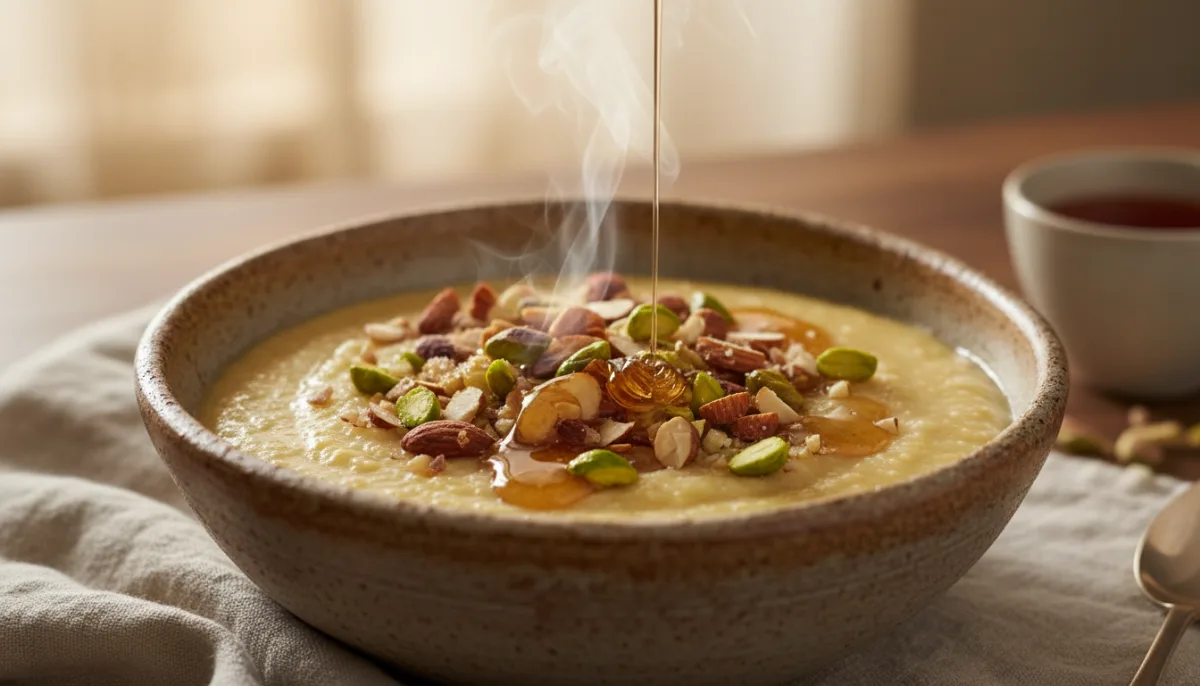
Garnish generously with chopped pistachios before serving warm.

About This Recipe

This traditional Afghan Halwa-e-Aurd is a comforting and aromatic breakfast or dessert, featuring toasted flour sweetened with a fragrant sugar syrup and enriched with cardamom and pistachios. It's a simple yet deeply flavorful dish that offers a taste of Afghan hospitality.
Afghan Halwa-e-Aurd (Flour Halwa) with Cardamom and Pistachios
Simple ingredients.
Big flavor.
✦
♨

Chef's Tips

For an extra rich flavor, use homemade ghee. Toasting the flour slowly and evenly is key to developing the halwa's deep, nutty flavor. Adjust the amount of sugar to your preference.
↔

Easy Substitutions

Unsalted butter can be used instead of ghee. Almonds or walnuts can replace pistachios for garnish. A pinch of saffron threads steeped in a tablespoon of warm milk can be added to the syrup for extra aroma and color.
▱

Storage & Reheating

Store leftover halwa in an airtight container at room temperature for up to 3 days. It can also be refrigerated for up to 1 week, but may become firmer.

Serving Suggestions

Serve warm with a cup of Afghan green tea. Enjoy as a sweet breakfast alongside fresh fruit. Offer as a light dessert after a meal. Pair with a dollop of plain yogurt for a tangy contrast.

Common Mistakes

1. Not toasting the flour enough: This results in a raw flour taste. Ensure the flour is a rich golden-brown and smells nutty. 2. Burning the flour: Over-toasting will make the halwa bitter. Keep the heat medium and stir constantly. 3. Adding syrup too quickly: This can cause lumps. Pour slowly while stirring vigorously. 4. Not stirring enough after adding syrup: The halwa needs to cook until it pulls away from the pan to achieve the right consistency.

Frequently Asked Questions

Can I make this vegan?

Yes, you can substitute the ghee with a neutral-flavored vegetable oil or vegan butter.

What is the texture of Halwa-e-Aurd?

It's typically soft, dense, and slightly crumbly, with a melt-in-your-mouth quality.

Can I prepare this ahead of time?

Absolutely! Halwa-e-Aurd can be made a day or two in advance and stored at room temperature. Gently reheat in a microwave or on the stovetop with a splash of water or milk if it's too firm.
MORE TO KNOW
Halwa-e-Aurd is a staple in Afghan cuisine, often served during special occasions, religious holidays, or as a comforting breakfast. The process of toasting the flour is crucial; it not only cooks the flour but also imparts a distinct nutty aroma and flavor that defines this dish. The slow, continuous stirring ensures even browning and prevents burning, which can make the halwa bitter. The addition of cardamom provides a warm, aromatic spice note that is characteristic of many Middle Eastern and South Asian sweets. While traditionally served warm, it can also be enjoyed at room temperature.
WHAT PEOPLE THINK

Reviews

☆

No reviews yet

Be the first person to review this recipe.

SHARE YOUR THOUGHTS

Made this recipe?

Tell us how it turned out.

Your review will be checked before appearing publicly.